


Vasant Vihar Clinic (South Delhi)
A-2/6, Vasant Vihar, New Delhi - 110057
+91 98109 77786 / +91 96677 21501
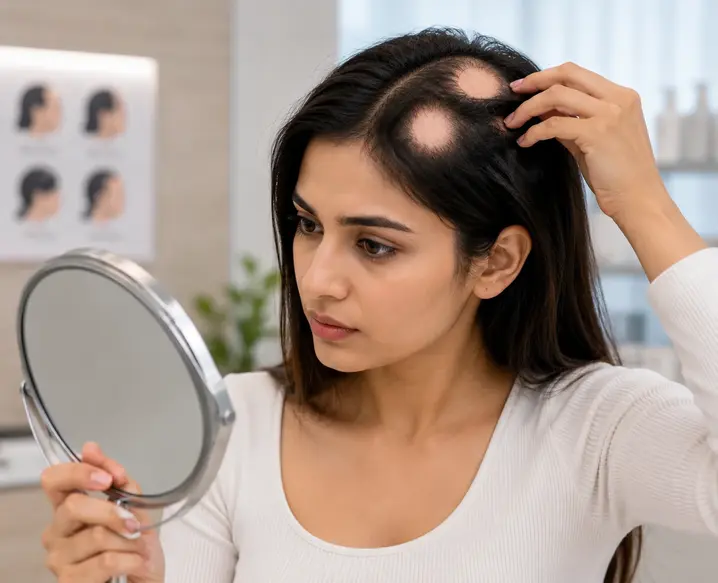
Your barber stops mid-cut and says, "There's a small bald spot here, did you know?" You didn't. It's round, smooth and about the size of a coin. A week later you find another one while oiling your hair. For some men it shows up in the beard first. It can be scary, especially because it seems to come out of nowhere. This is often alopecia areata, and the good news is that hair can grow back in many cases. At Dadu Medical Centre, a skin and hair clinic in Delhi with centres in Vasant Vihar and Rajouri Garden, alopecia areata treatment focuses on calming the reaction and helping the follicles wake up again. Dr. Nandini Dadu and her team guide you through it step by step.
Alopecia areata is an autoimmune condition. For reasons that aren't fully understood, the immune system starts attacking the hair follicles, as if they were something foreign. The follicles shrink and stop producing hair, but here's the important part: they usually aren't destroyed. That's why regrowth is often possible.
The skin in the patch usually looks normal and smooth. Some people notice mild tingling or itching before a patch appears, and a few get tiny dents in their nails. It isn't contagious, and it isn't caused by poor hygiene or hair products. The course is hard to predict. Small patches sometimes regrow on their own, but they can also come back later or spread, which is why proper treatment and follow-up matter.
Nobody knows exactly what switches it on. What doctors do know is that the immune system is behind it, and a few things make it more likely.
It's worth saying clearly: alopecia areata isn't caused by oiling too little, washing too often, or a new shampoo. It's not something you did.
Alopecia areata can't be fully prevented. These steps help you catch it early and give treatment the best chance.
Get new patches checked quickly. Treatment usually works better when patches are small and new.
Test your thyroid. It's a simple blood test and often worth doing with alopecia areata.
Look after your stress levels. Easier said than done, but sleep and some downtime do help.
Be gentle with your hair. Skip tight hairstyles, harsh chemicals and aggressive combing on thinning areas.
Protect bald patches from the sun. Use a cap or sunscreen so the skin doesn't burn.
Avoid rubbing onion, garlic or strong home remedies on the patch. They can irritate the skin without fixing the cause.
Keep your follow-ups. Patches can come back or new ones can appear, and early action makes a difference.
a hair transplant for stable alopecia patches that haven't regrown.
cosmetic pigment that disguises bald patches.
fills in patchy or thinned eyebrows.
restores hair in stable beard patches.
Book a free consultation at our clinic in Delhi and get that bald patch checked before it spreads.
Get in touch
Finding a bald patch out of nowhere can be really upsetting, and a lot of people panic and try every oil and home remedy they hear about. At Dadu Medical Centre, our doctors first confirm it's alopecia areata and not a fungal infection or another type of hair loss, since they're treated very differently. Dr. Nandini Dadu and her team then choose treatment based on the size and spread of your patches, and keep a close eye on how the hair responds. You'll get honest guidance, including the fact that alopecia areata can come and go, and what to do if it does. Both our Vasant Vihar and Rajouri Garden centres offer this care.
Ans. No. It's an immune condition, so you can't catch it or pass it on to anyone.
Ans. The immune system attacks the hair follicles by mistake. Genes, other autoimmune conditions like thyroid problems, and sometimes stress can play a part.
Ans. It depends on how widespread it is. Options include medicine injected into the patches, prescription creams, minoxidil, PRP and, for extensive cases, oral medicines.
Ans. In many cases, yes, especially with small patches. The follicles usually stay alive, which is why regrowth is possible.
Ans. Regrowing hair often comes in fine and white at first. It usually thickens and regains its color over time.
Ans. It can. Alopecia areata tends to come and go, so it helps to know the early signs and get new patches treated quickly.
Ans. Yes. Beard patches are quite common in men, and eyebrows or eyelashes can be affected too.
Ans. Stress can act as a trigger in some people, but it isn't the only cause.
Ans. Yes. Treatment for kids is gentler, often starting with creams rather than injections.
Ans. Usually not while it's active. The immune system can attack transplanted hair too, so other treatments come first.
Book a free consultation at our clinic in Delhi and get that bald patch checked before it spreads.
Dr. Nandini Dadu explains why alopecia areata happens, what the different types look like, and which treatments help hair grow back.
Alopecia Areata: Causes, Symptoms & Treatments | Explained by Dr Nivedita Dadu- Expert Dermatologist
A-2/6, Vasant Vihar, New Delhi - 110057
+91 98109 77786 / +91 96677 21501
J-12/28, 1st Floor, Near Rajouri Garden Metro Station, New Delhi - 110027
+91 98109 77786 / +91 96677 21501
Recognised for excellence in dermatology and skin care.
Safe clinical protocols and technology-led treatment planning.
Personalised care delivered by experienced dermatology professionals.