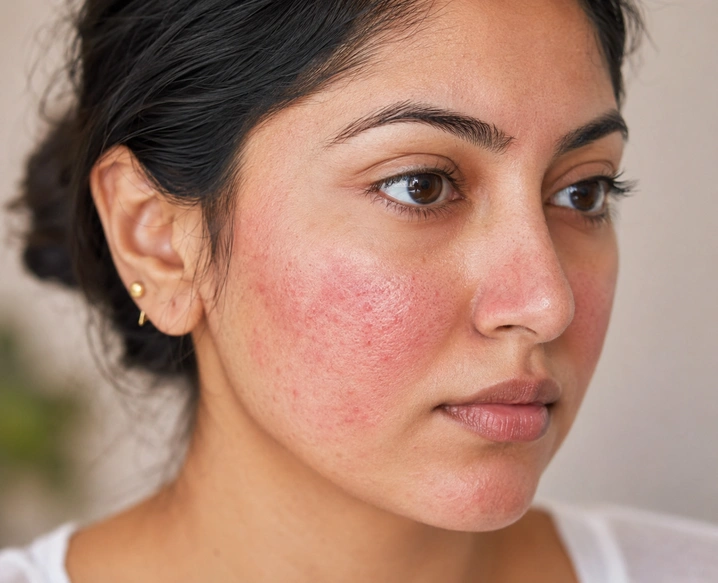
One cup of hot chai and your cheeks light up. A bit of sun, a spicy lunch, a tense meeting, and there it is again: that warm red flush people keep mistaking for blushing. If the redness hangs around longer than it should, or comes with small bumps that look like acne, it may be rosacea. It's a long-term condition, but it's also very manageable once you know what you're dealing with. At Dadu Medical Centre, a skin clinic in Delhi, rosacea treatment focuses on two things: calming the redness you see now, and working out what keeps bringing it back. Dr. Nivedita Dadu and her team go through both with you.
Rosacea is a chronic skin condition that mostly affects the centre of the face, meaning the cheeks, nose, forehead and chin. The skin flushes easily and stays red for longer than it should, and over the years that redness can become permanent. It usually comes in flare-ups, with calmer stretches in between.
Rosacea is more obvious on fair skin, but it happens in Indian skin too, where it's often missed or mistaken for sensitivity, allergy or acne. Left alone, it tends to get slowly worse, so getting the diagnosis right early really does help.
Nobody knows the exact cause yet. What's clear is that genes, the immune system and the blood vessels in the face all play a part, and certain everyday things make it flare.
Tiny mites called Demodex live on everyone's face, but some people with rosacea have far more of them, and that may add to the inflammation.
Rosacea can't be switched off, but learning your triggers makes a huge difference.
Wear sunscreen every day. A mineral one is usually gentler, and a hat helps on bright days.
Let your chai cool a little. Warm is fine. Piping hot is what sets off the flush.
Notice your food triggers. If spicy meals set you off, go milder, at least when your skin is acting up.
Cut back on alcohol.
Stay cool. Step out of hot kitchens when you can, and keep a fan or cool water spray handy.
Go easy on your skin. Skip scrubs and strong peels at home, and stick to fragrance-free products.
Keep a flare diary. Writing down what happened before each flare makes your triggers much easier to spot.
Keep steroid creams off your face. Used without a doctor's advice, they can make rosacea much worse over time.
helps settle flushing, redness and irritated skin.
calms redness so the skin looks more even.
for rosacea-prone skin that also gets oily or bumpy.
a gentle medi-facial that soothes inflamed skin.
hydrates and calms irritated skin without triggering a flare.
Book a free consultation and find out whether that redness really is rosacea, and what can be done about it.
Get in touch
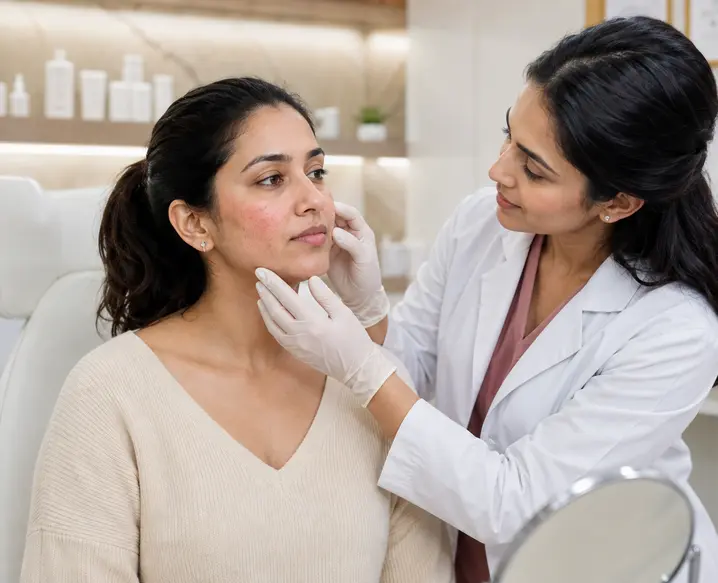
Rosacea isn't something you treat once and forget. It needs someone who'll look at your skin over time and adjust the plan as things change. At Dadu Medical Centre, that starts with a proper consultation. Our doctors will check which type of rosacea you have, rule out look-alikes like acne or allergy, and ask about your routine, food, work and skincare. Dr. Nivedita Dadu and her team usually begin gently, and bring in lasers or light treatments only when your skin is ready for them. You won't be left guessing between visits either, because you'll know what's likely to trigger a flare and how to handle one when it comes.
The exact cause isn't known. Genes, the immune system and the blood vessels in the face all seem to play a part, while sun, heat, hot drinks, spicy food, alcohol and stress make it flare.
It starts with working out your type of rosacea. Treatment usually begins with creams or tablets, and vascular laser or photofacial sessions are added for redness and visible veins.
No, though the bumps can look alike. Rosacea doesn't cause blackheads, and many acne products actually make it worse.
Not yet. But with the right treatment and some care around triggers, most people keep it quiet enough that it barely bothers them.
Yes. It's less obvious on brown skin, so it often goes unnoticed or gets mistaken for sensitivity or allergy.
They are, when chosen and set correctly. Your skin may be calmed down with medicine first, before any laser session.
Bumps often settle within a few weeks on medicine. Redness and visible veins usually need a few laser or light sessions, spaced apart.
Very little. You might look a bit pink for a day or two. Wear sunscreen and avoid heat for a few days afterwards.
Yes. A green-tinted primer helps tone down redness, and mineral makeup is usually gentler. Just take it off softly at night.
Most people notice it in their 30s or later, though it can show up earlier. Treatment is adjusted to your age and skin, whenever it begins.
Book a free consultation and find out whether that redness really is rosacea, and what can be done about it.
A-2/6, Vasant Vihar, New Delhi - 110057
+91 98109 77786 / +91 96677 21501
J-12/28, 1st Floor, Near Rajouri Garden Metro Station, New Delhi - 110027
+91 98109 77786 / +91 96677 21501
Recognised for excellence in dermatology and skin care.
Safe clinical protocols and technology-led treatment planning.
Personalised care delivered by experienced dermatology professionals.