


Vasant Vihar Clinic (South Delhi)
A-2/6, Vasant Vihar, New Delhi - 110057
+91 98109 77786 / +91 96677 21501
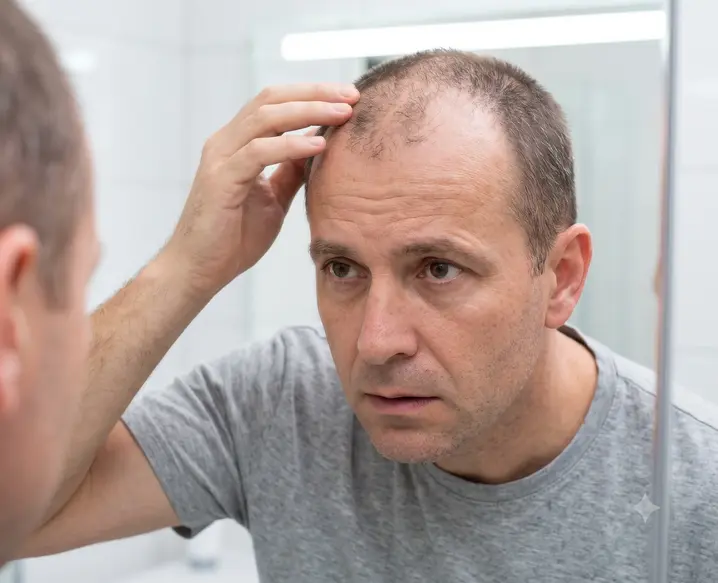
It starts small. A few more strands on the pillow. A clump in the bathroom drain. Then one day a cousin at a wedding asks, half joking, "Is your hairline going back?" and you can't stop checking the mirror. Hair fall in men is incredibly common, and a lot of it comes down to genes. But common doesn't mean you have to just watch it happen. At Dadu Medical Centre, a skin and hair clinic in Delhi with centres in Vasant Vihar and Rajouri Garden, hair fall treatment for men begins by finding the real reason your hair is thinning. Dr. Nandini Dadu and her team then plan treatment around that, and the earlier you start, the more hair there is to save.
Everyone sheds some hair every day. That's normal, and new hair grows in its place. Hair fall becomes a problem when more hair is falling than growing back, or when the new hair comes in thinner and weaker each time.
The most common type by far is male pattern baldness, also called androgenetic alopecia. It's genetic, it's gradual, and it tends to start anywhere from the late teens to the thirties. Other types, linked to stress, illness or scalp problems, can come on faster. Either way, hair follicles that have been inactive for a long time are much harder to revive, which is why getting it checked early makes such a difference.
Genes are the big one. But they're not the only reason, and sometimes two or three causes stack up at once.
If baldness runs in your family, habits alone won't stop it. They can slow it down, though, and they make treatment work better.
Don't wait. The earlier you start, the more hair can be saved.
Eat enough protein and iron. Dal, eggs, paneer, fish and leafy greens all help.
Get blood tests if shedding is sudden. Iron, vitamin D, B12 and thyroid are worth checking.
Treat dandruff and scalp itch. An unhealthy scalp doesn't grow healthy hair.
Go easy on heat and harsh styling. Strong gels, daily blow-drying and tight caps worn all day don't help.
Think twice before gym steroids. They can make genetic hair loss faster.
Manage stress where you can. Sleep, exercise and some downtime help more than people expect.
Be wary of miracle oils and shampoos. They may make hair look better, but they don't fix genetic hair loss.
a hair growth treatment that helps reduce shedding and support regrowth.
an upgraded version for thinning hair and heavy shedding.
concentrated growth factors from your own blood for weak roots and thinning areas.
a popular pick for thinning hair and weak roots.
aimed at thinning hair that needs a stronger boost.
a popular pick for slow hair growth and thinning.
a doctor-prescribed injection that blocks DHT to slow genetic hair loss and a receding hairline.
scalp injections that help reduce shedding and strengthen weak roots.
nourishes the scalp to cut down hair fall.
for male pattern thinning and a receding hairline.
helps with loss of density and weak follicles.
a popular upgraded version for density loss and follicle weakness.
improves hair density.
a scalp therapy for thinning, low-density hair.
strengthens weak follicles.
an IV drip that supports weak hair growth from the inside.
tiny pigment dots that mimic hair, so thin or bald areas look fuller. It's cosmetic and doesn't regrow hair.
moves healthy hair to bald spots, the crown or a receding hairline.
fills in a patchy beard or moustache.
Book a free consultation at our clinic in Delhi and find out why your hair is falling, and how much of it can be saved.
Get in touch
A lot of men jump straight to hair transplant ads, or spend years on oils and shampoos, without anyone checking why the hair is actually falling. At Dadu Medical Centre, that's where we start. Our doctors look at your scalp closely, ask about your family history, diet, stress and gym routine, and order tests if something doesn't add up. Dr. Nandini Dadu and her team then build a plan in steps, usually medical treatment first, adding in-clinic therapies where they'll help, and suggesting a transplant only if it genuinely makes sense for you. You'll also get honest answers about what can be regrown and what can't. Our centres in Vasant Vihar and Rajouri Garden both offer the full range.
Ans. Mostly because of genes and a hormone called DHT, which slowly shrinks hair follicles. Stress, poor diet, thyroid problems and scalp infections can also cause hair fall.
Ans. It starts with a hair and scalp analysis. Treatment then usually combines medicines with options like PRP, GFC or QR678, and hair transplant only if it's needed.
Ans. Thinning hair can often be thickened again if follicles are still alive. Areas that have been completely bald for years usually need a transplant.
Ans. Be patient. Hair fall usually slows first, and visible regrowth often takes a few months of steady treatment.
Ans. Both use growth factors from your own blood. GFC is a more concentrated version. Your doctor will suggest which suits your hair.
Ans. Not always. A transplant moves hair, it doesn't stop the rest from thinning. Most men still need medical treatment to protect the hair they have.
Ans. They can make hair look and feel better. They don't treat genetic hair loss.
Ans. Usually not. Stress-related shedding often settles within a few months once the trigger passes, though it can uncover genetic thinning underneath.
Ans. As soon as you notice your hairline or crown changing. Men in their twenties often get the best results because more follicles are still active.
Ans. Hair treatments are available at both our Vasant Vihar and Rajouri Garden centres in Delhi.
Book a free consultation at our clinic in Delhi and find out why your hair is falling, and how much of it can be saved.
Dr. Nandini Dadu explains why men lose hair, which treatments actually work, and when a hair transplant makes sense.
A-2/6, Vasant Vihar, New Delhi - 110057
+91 98109 77786 / +91 96677 21501
J-12/28, 1st Floor, Near Rajouri Garden Metro Station, New Delhi - 110027
+91 98109 77786 / +91 96677 21501
Recognised for excellence in dermatology and skin care.
Safe clinical protocols and technology-led treatment planning.
Personalised care delivered by experienced dermatology professionals.