


Vasant Vihar Clinic (South Delhi)
A-2/6, Vasant Vihar, New Delhi - 110057
+91 98109 77786 / +91 96677 21501
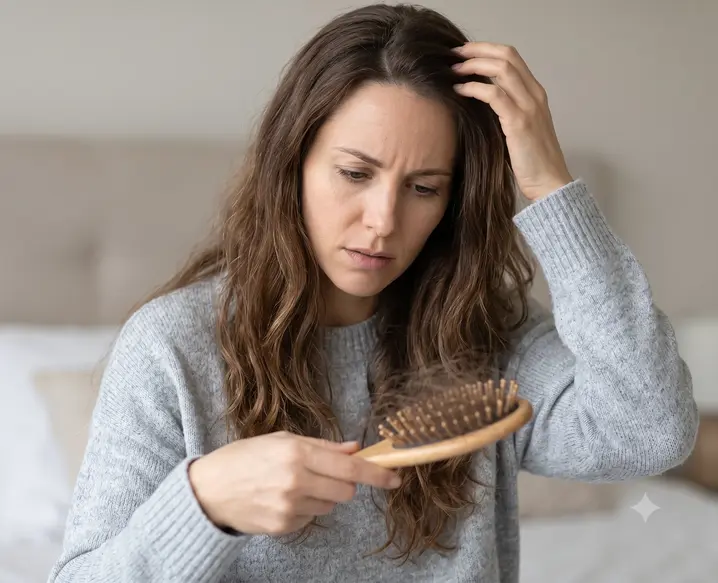
Your ponytail doesn't feel as thick as it used to. The parting looks wider in selfies, and there's hair on the bathroom floor every single morning. Maybe it started after your baby was born, or during a stressful year, or it just crept up slowly. Hair fall in women is far more common than most people talk about, and it can really shake your confidence. The reasons are often different from men, too, with hormones, PCOD, thyroid and low iron playing a big part. At Dadu Medical Centre, a skin and hair clinic in Delhi with centres in Vasant Vihar and Rajouri Garden, hair fall treatment for women starts by finding the cause. Dr. Nivedita Dadu and her team then treat the hair and the reason behind it.
Losing some hair every day is normal. Hair grows in cycles, and old strands fall out to make room for new ones. It becomes a concern when the shedding is heavier than usual, or when the hair growing back is finer and thinner each time.
The most common long-term type is female pattern hair loss, which thins the hair gradually over the top of the head while the front hairline usually stays put. Sudden shedding is often temporary, but it can uncover thinning that was already starting. Either way, getting it checked early means more hair can be protected.
In women, hair fall is often a sign of something else going on in the body. Quite often it's more than one thing at once.
A few changes can make a real difference, especially when combined with treatment.
Get your blood tested. Iron (ferritin), thyroid, vitamin D and B12 are worth checking if shedding has increased.
Eat enough protein. Dal, paneer, eggs, curd and sprouts all help your hair grow back stronger.
Don't crash diet. Lose weight gradually if you need to.
Loosen your hairstyles. Switch between styles and avoid pulling hair tight every day.
Cut back on heat and chemicals. Give your hair a break from straighteners, rebonding and bleach.
Be gentle when it's wet. Use a wide-tooth comb and avoid rubbing hard with a towel.
Manage PCOD and thyroid properly. Hair improves more when the underlying condition is under control.
See a doctor early. A widening parting is much easier to treat when caught early.
a scalp treatment that reduces shedding, including hair fall after pregnancy.
focused on hormone-related thinning at the crown and parting.
growth factors from your own blood for thinning hair.
scalp injections that help reduce shedding and strengthen roots.
concentrated growth factors for thinning along the parting and crown.
a popular pick for thinning hair and weak roots.
helps reduce heavy shedding and supports thicker hair.
for thinning that needs a stronger boost.
a popular pick for slow hair growth.
a doctor-prescribed anti-androgen for hormone-related thinning in women.
helps with density loss and weak follicles.
improves hair density.
a scalp therapy for low-density hair.
strengthens weak follicles.
an IV drip that supports hair growth, useful after illness or deficiency.
an IV drip for women whose hair fall is linked to PCOS.
cosmetic pigment that makes a thin parting look fuller.
for well-defined thinning areas when other treatments aren't enough.
Book a free consultation at our clinic in Delhi and find out what's really behind your hair fall.
Get in touch
Women's hair fall is rarely just a hair problem. It's often tied to periods, pregnancy, PCOD, thyroid or diet, and treating the scalp alone doesn't go far if those are left out. At Dadu Medical Centre, our doctors take time to understand your health, cycle, stress and routine, and order blood tests if something needs checking. Dr. Nivedita Dadu and her team then combine medical care with in-clinic treatments where they'll actually help, adjusting the plan as your hair responds. If you're pregnant, breastfeeding or planning a baby, treatment is chosen with that in mind too. You can visit either our Vasant Vihar or Rajouri Garden centre.
Ans. Some daily shedding is completely normal. If you're seeing clumps, a wider parting or more scalp than before, it's worth getting checked.
Ans. Common causes include low iron, PCOD, thyroid problems, pregnancy, stress, crash diets and genetics. Often it's a combination.
Ans. It starts with a scalp analysis and blood tests. Treatment then combines medicines and supplements with options like PRP, GFC or QR678, depending on the cause.
Ans. Usually not. Postpartum shedding tends to settle within several months, though treatment can help if it lingers or reveals thinning underneath.
Ans. Yes. PCOD can thin the hair on the scalp, so managing the hormones is an important part of treatment.
Ans. In many cases it can thicken again, especially if treatment starts early and the follicles are still active.
Ans. Hair grows slowly. Shedding often reduces first, and visible thickness usually takes a few months of steady treatment.
Ans. It's commonly used for women's hair loss, but it isn't suitable during pregnancy or breastfeeding. Your doctor will guide you.
Ans. They can weaken the hair and cause breakage, especially if done often. Giving your hair breaks between treatments helps.
Ans. Women's hair treatments are available at both our Vasant Vihar and Rajouri Garden centres in Delhi.
Book a free consultation at our clinic in Delhi and find out what's really behind your hair fall.
Dr. Nivedita Dadu explains why women lose hair, how hormones and nutrition play a part, and which treatments help hair grow back thicker.
A-2/6, Vasant Vihar, New Delhi - 110057
+91 98109 77786 / +91 96677 21501
J-12/28, 1st Floor, Near Rajouri Garden Metro Station, New Delhi - 110027
+91 98109 77786 / +91 96677 21501
Recognised for excellence in dermatology and skin care.
Safe clinical protocols and technology-led treatment planning.
Personalised care delivered by experienced dermatology professionals.