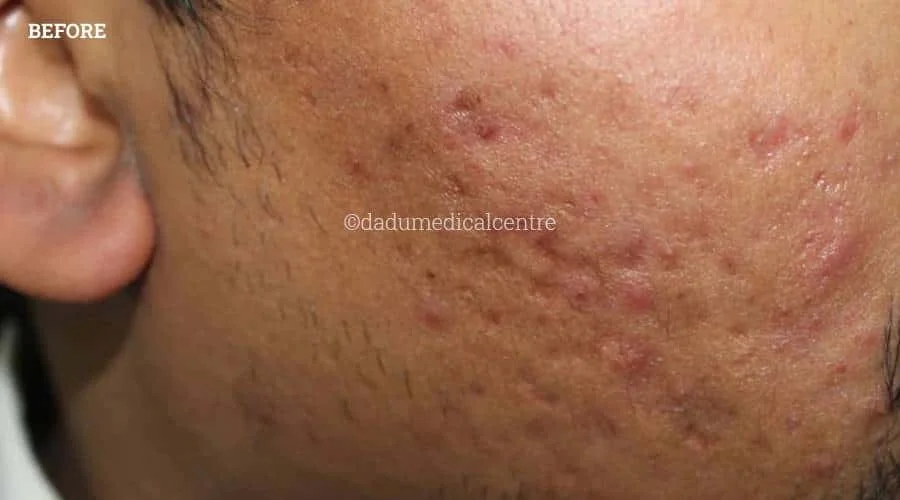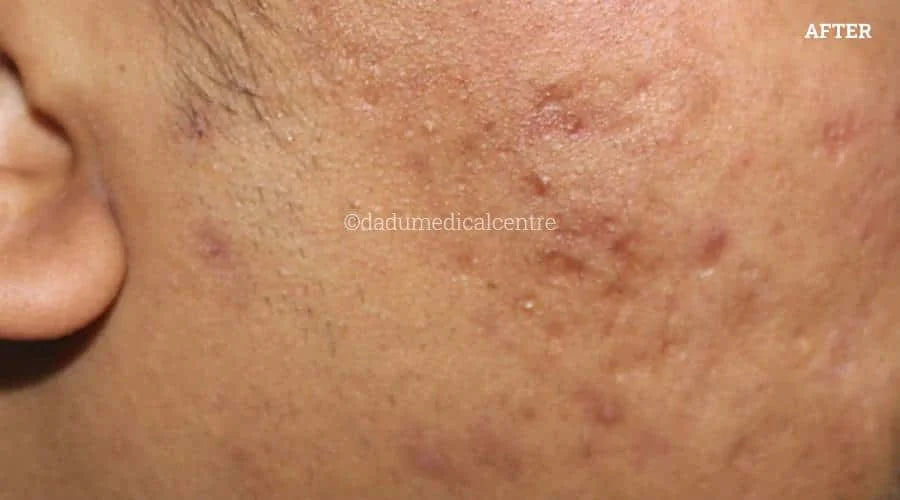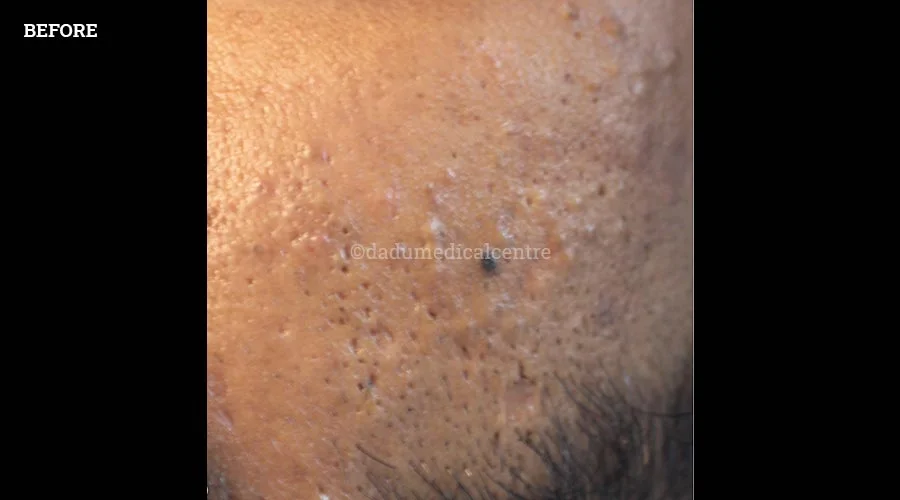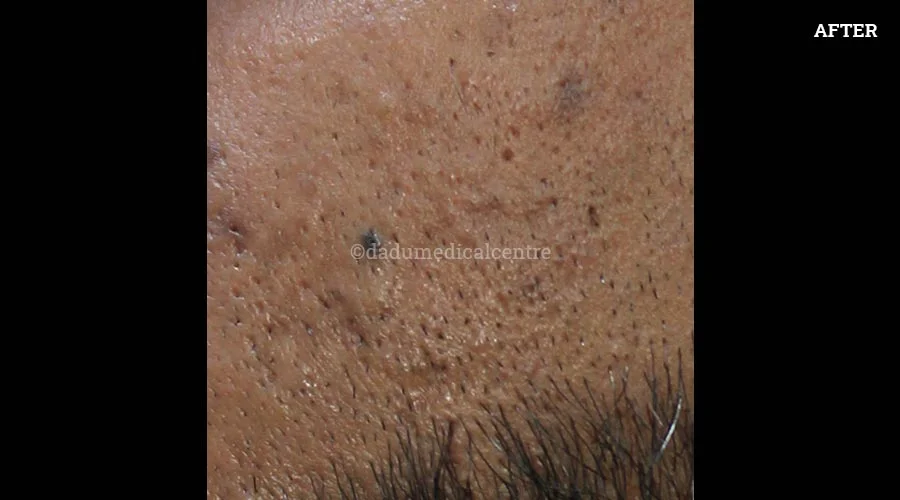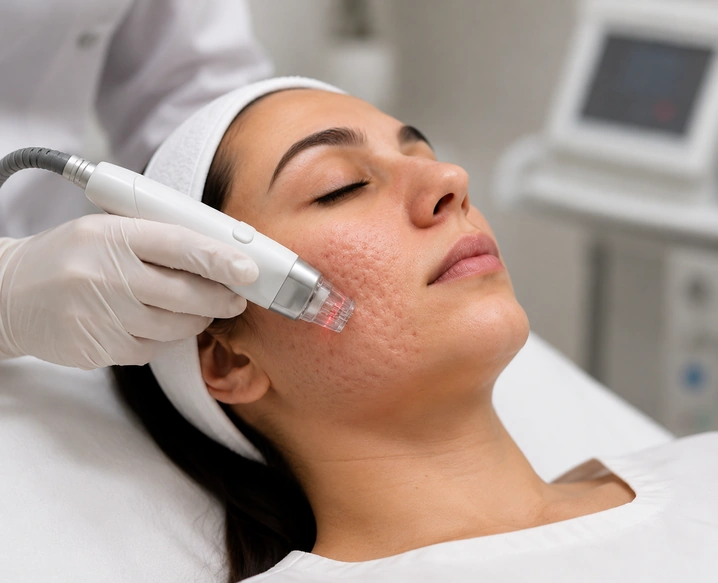
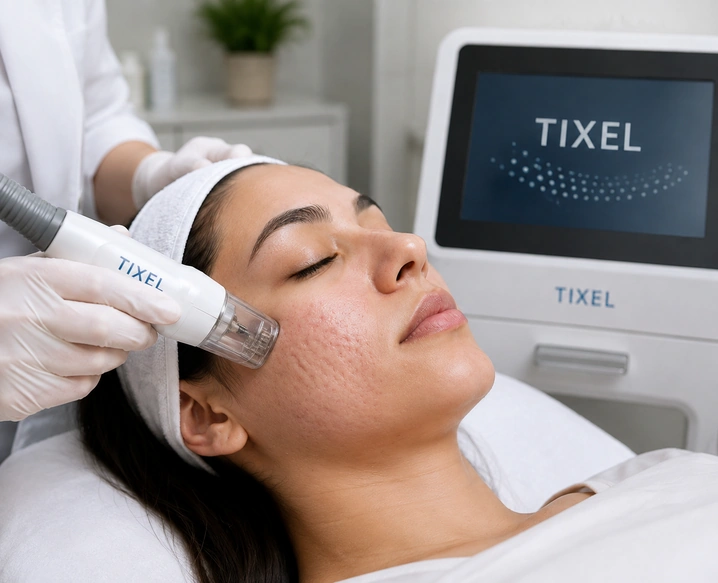
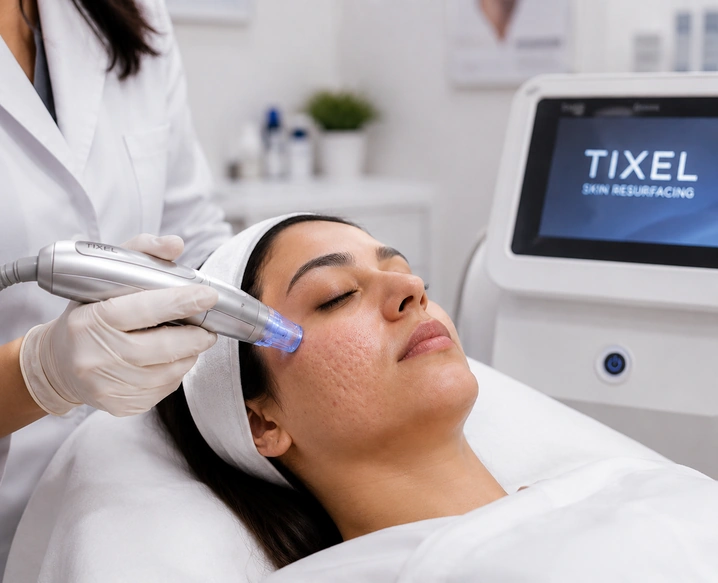
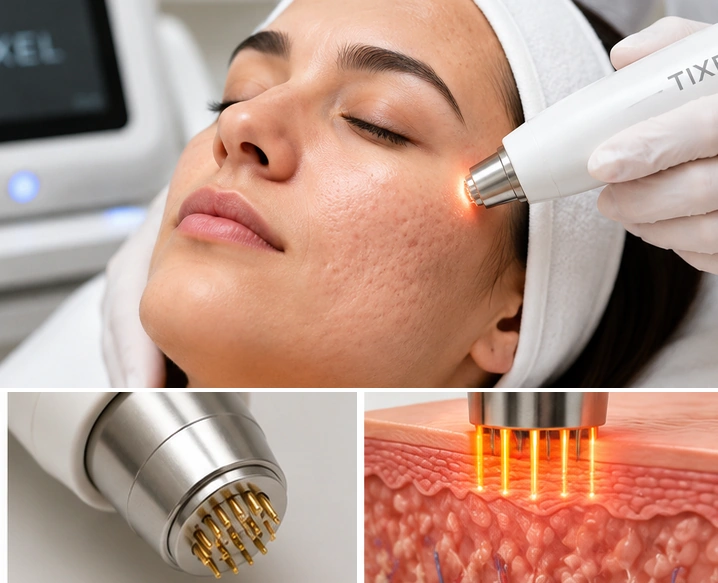
TIXEL is a non-invasive, non-laser skin resurfacing treatment that works through thermo-mechanical ablation instead of light energy. A titanium tip lined with tiny biocompatible pins is heated to around 400°C and briefly touches the skin, creating controlled micro-injuries that push the body to rebuild collagen and elastin on its own. Because there's no laser beam involved, the deeper skin layers stay untouched, which keeps the recovery shorter than most resurfacing options. The treatment is mainly used for acne scars, but it's also applied for open pores, fine lines, mild-to-moderate wrinkles, skin laxity, and stretch marks. Areas like the face, upper lip, crow's feet, cheeks, forehead, neck, décolleté, and hands all respond well to it. A single session typically runs about 45 minutes. Cost depends on the area treated, scar depth, and number of sessions needed; this is finalised during consultation rather than quoted as a flat number. Available at Dadu Medical Centre Vasant Vihar (South Delhi) & Rajouri Garden (West Delhi).
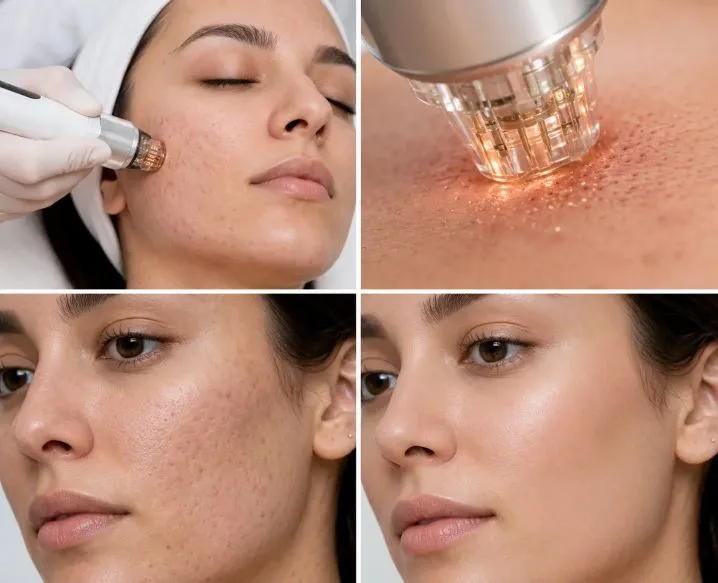

We can help with that! Schedule a free online consultation with one of our expert Doctors and we'll help you create a customized plan.
Book a free online consultationSkin assessment to confirm TIXEL is the right fit for the scar type / skin concern, and to map out the number of sessions.
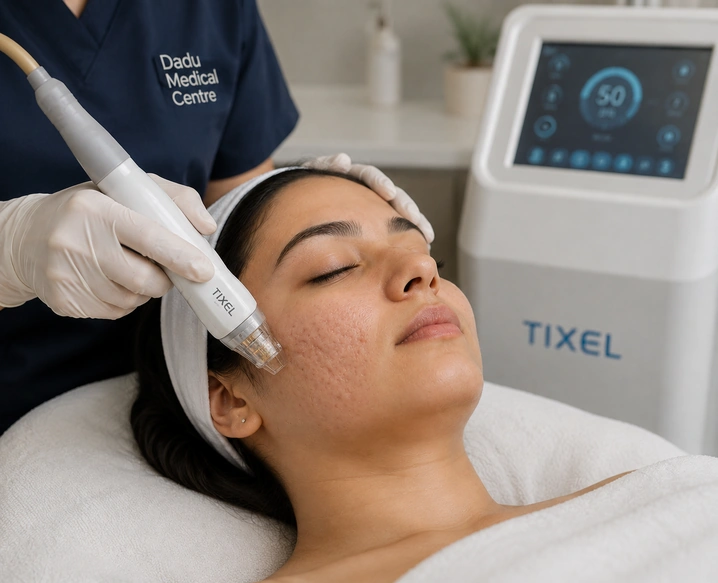
The treatment area is cleaned; numbing cream may be applied depending on sensitivity.
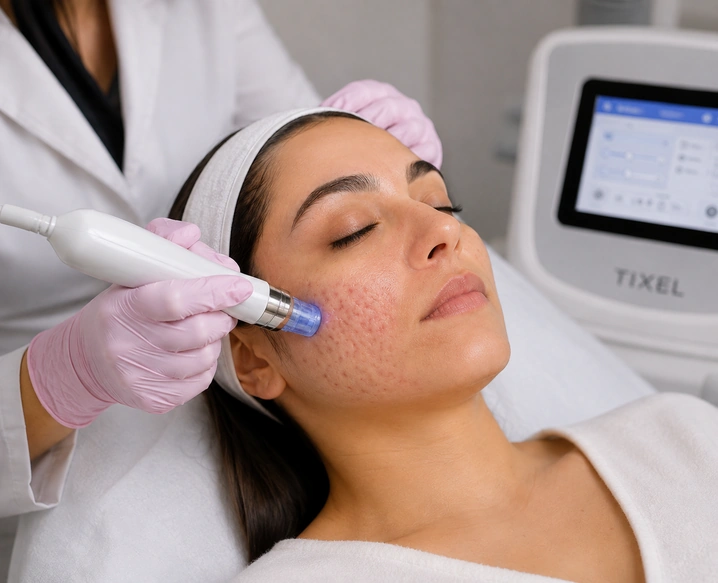
The titanium tip is moved across the treatment area, delivering brief pulses of heat at a pre-set depth and contact time.
Deeper or more textured areas may get a second, more targeted pass.
A soothing moisturiser is applied immediately after the pass.
Mild redness and crusting settle over 2–3 days; make-up can usually resume after that.
TIXEL's mechanism is different from both ablative and non-ablative lasers: it relies on pure heat conduction rather than light. The titanium pins make momentary contact with the skin, and the depth of penetration is controlled by adjusting contact time, so the same device can be used gently on delicate areas like the eyelids or more aggressively on thicker, scarred skin on the cheeks or back.
Because the technology avoids the thermal spread that lasers can cause, it tends to be more forgiving on Indian and other darker skin tones that are otherwise prone to post-inflammatory pigmentation after aggressive resurfacing. That said, results still depend heavily on correct depth and contact-time selection for the specific scar type, which is why the treatment plan is built around the individual patient rather than a fixed protocol. Dadu Medical Centre's dermatologists calibrate these settings session to session based on how the skin is healing.
Not particularly — most patients describe it as a low-pain treatment, and numbing cream can be used beforehand if needed. There's no injected anaesthesia involved.
TIXEL uses direct heat conduction through a titanium tip rather than light energy, so it doesn't penetrate as deep into the skin as most lasers. This generally means less risk of pigmentation issues and a faster bounce-back.
It varies by scar depth and skin concern; some patients notice a difference after the first session, but a course of multiple sessions spaced a few weeks apart usually gives the fuller result. This is confirmed during consultation.
Redness and light crusting for about 2–3 days is typical. Most people are back to normal routines, including make-up, within that window.
Yes — it's often paired with skincare actives or other resurfacing approaches depending on what the scar or skin concern needs, decided case by case.
Pricing depends on the treatment area, scar severity and number of sessions. Contact Dadu Medical Centre for an exact quote after assessment.