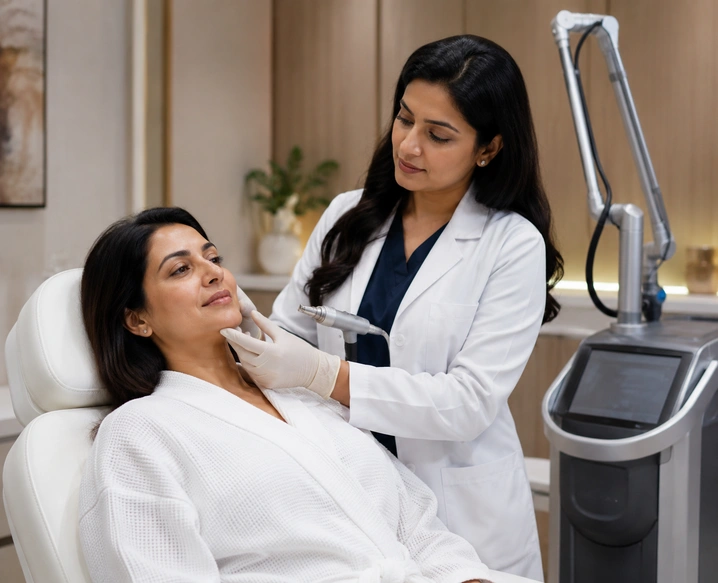
Wrinkles, scarring, uneven texture, sun damage, stretch marks are the kinds of skin concerns that creams and basic facials simply can't reach. DMC-Fraxogenus® is a fractionated CO2 laser treatment developed in-house at Dadu Medical Centre, built to go deeper than surface-level options. It removes damaged outer skin layers with precision and pushes the skin to regenerate healthier tissue underneath, which is why results tend to last years rather than weeks. The treatment uses a long-wavelength CO2 laser, since shorter wavelengths can't reach deep enough into the tissue where stretch mark damage actually sits. That laser beam is "fractionated" pixelated into microscopic beams that treat small vertical columns of tissue (called microscopic treatment zones, or MTZs) rather than the entire surface at once. Each MTZ is surrounded by untouched, healthy skin, which supplies the nutrients needed for a faster healing response. A session takes under two hours (the actual laser application itself only 15-20 minutes), discomfort is minimal thanks to cooling during treatment, and full results build over 3 to 6 months. Cost in Delhi typically ranges from ₹10,000 to ₹40,000, depending on stretch mark size and severity, and number of sessions needed. Available at Dadu Medical Centre Vasant Vihar (South Delhi) & Rajouri Garden (West Delhi).
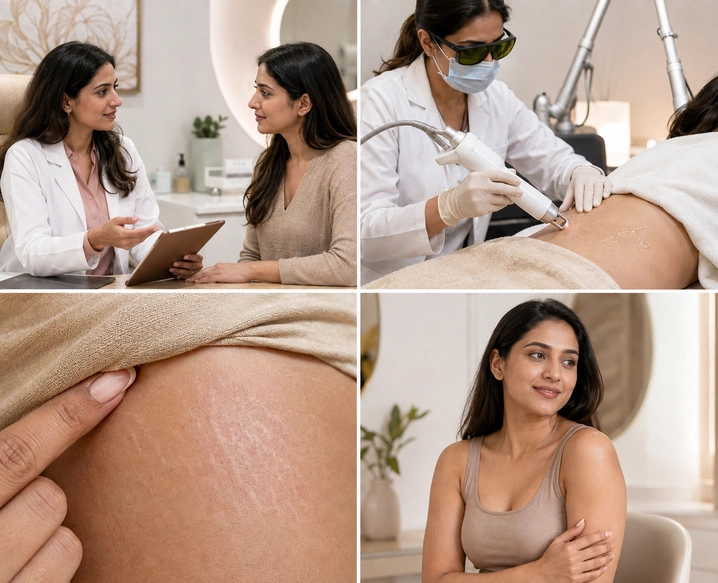

We can help with that! Schedule a free online consultation with one of our expert Doctors and we'll help you create a customized plan.
Book a free online consultationblood sugar, blood pressure, and cholesterol are reviewed to rule out contraindications

sunscreen or other prescribed topical creams are used for 4-6 weeks beforehand to reduce risk of post-treatment complications; certain medications are paused as advised

topical numbing cream is applied before the laser session
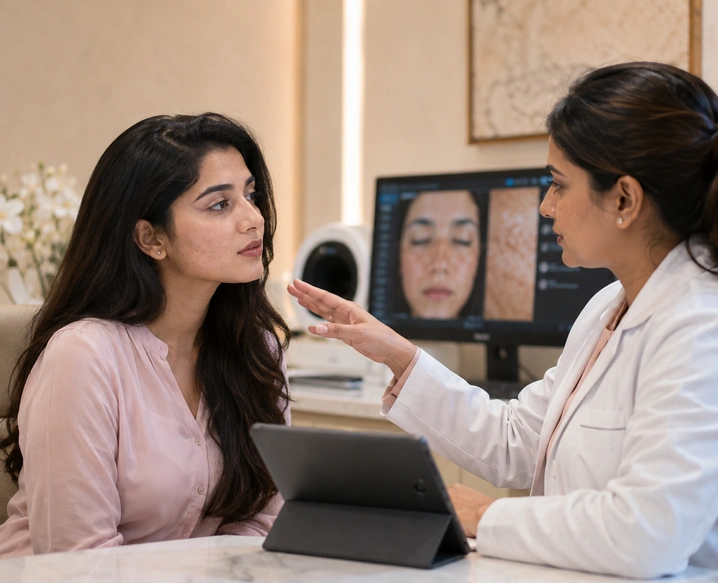
settings are calibrated to the depth of the stretch mark or scar tissue being treated
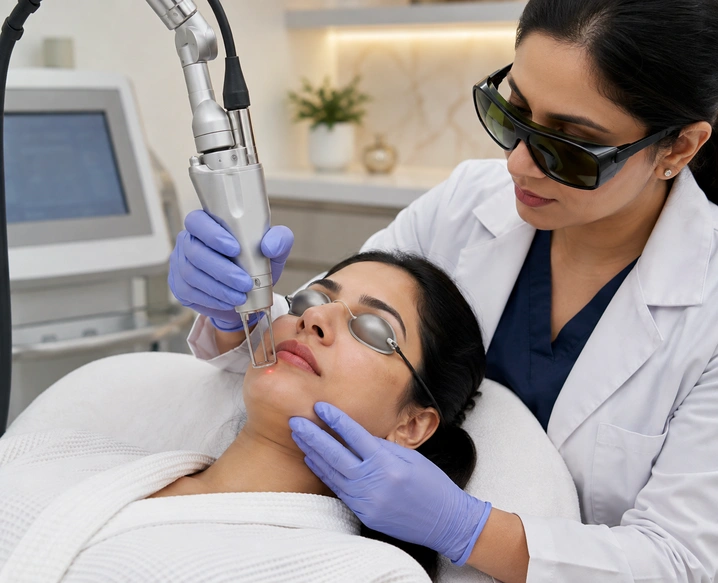
the fractionated beam creates microscopic treatment zones (MTZs) in vertical columns, reaching deep tissue while leaving surrounding skin intact; cooling is applied throughout to manage discomfort
post-care creams are applied until crusting fully resolves, broad-spectrum sunscreen is used, and oral medication may be prescribed if needed
Repeated over time depending on severity and how the skin responds; younger patients typically need fewer sessions
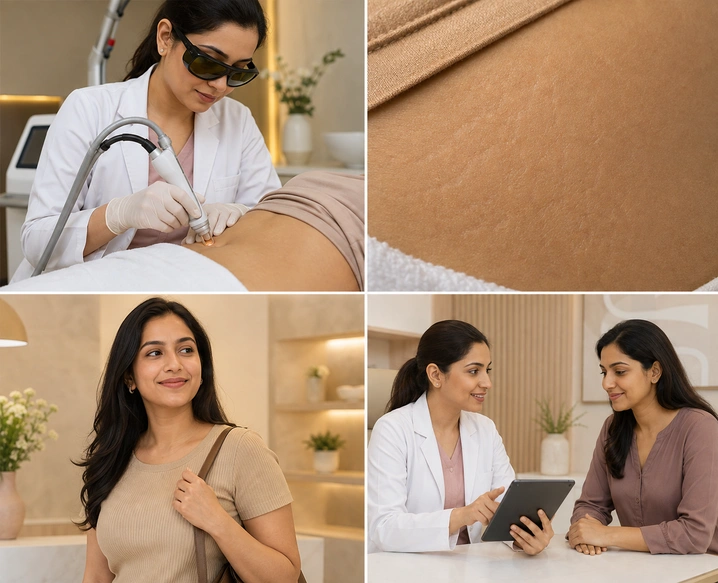
The core idea behind fractionating the CO2 laser beam is precision with less collateral damage rather than treating the entire skin surface uniformly, the beam is split into microscopic vertical columns (MTZs), each one thermally damaging a small column of tissue while the untouched skin around it stays intact and healthy. That surrounding tissue is what supplies nutrients for a faster repair response, since the body's tissue-repair mechanism kicks in immediately after the laser pass.
The long wavelength matters specifically because stretch mark damage sits deeper than shorter-wavelength lasers can effectively reach CO2's longer wavelength penetrates further without damaging the epidermal cells along the way. Once the laser energy converts to heat in the target tissue, that thermal damage is what triggers the body to stimulate fresh collagen production in its place. Laser settings and precautions are calibrated specifically for Indian skin types, since pigmentation risk and healing response can differ meaningfully across skin tones.
It uses a fractionated CO2 laser that creates microscopic treatment zones deep in the skin, destroying damaged tissue in controlled columns while leaving surrounding skin intact this triggers the body's own collagen-production response as it heals.
It's not considered painful; most patients experience a heating or prickling sensation during treatment, managed with cooling devices throughout the session.
The laser application itself takes only 15-20 minutes, with the full session under two hours including prep. There's some downtime for a few days post-treatment as the deeper tissue heals, but most people return to daily activities almost immediately.
This depends on stretch mark severity, skin type, and age; younger patients generally need fewer sessions due to stronger natural healing capacity.
Beforehand: blood sugar, blood pressure, and cholesterol are checked, sunscreen or prescribed creams are used for 4-6 weeks prior, and certain medications may be paused. Afterward: avoid direct sun exposure, apply post-care creams until crusting resolves, use broad-spectrum sunscreen, and follow the prescribed skincare routine strictly.
Cost ranges from ₹10,000 to ₹40,000, varying with stretch mark size and severity, treatment type, and number of sessions required.
Schedule your visit for this specialized treatment.