
Stretch marks medically known as striae distensae aren't a serious medical issue, but they're a genuinely common source of distress for the people dealing with them. They form when skin stretches or shrinks faster than it can adapt, rupturing the collagen and elastin that normally support it. Pregnancy, rapid weight change, muscle gain from weightlifting, hormonal shifts, puberty, or certain medications are the usual triggers, and marks typically start as smooth bands before developing into the narrower streaks and lines most people recognise. DMC-Pixigenus® takes a non-ablative approach to this rather than removing an entire skin layer the way traditional lasers do, it creates small, selective perforations while keeping the surrounding tissue intact, which is what allows the epidermis to regenerate faster. A laser beam delivers controlled micro-injuries that trigger the body's own healing response, and this is followed by an application of growth-factor-rich proteins extracted from the patient's own blood, layered on to push collagen rebuilding further. Stretch marks can show up on the stomach, thighs, hips/buttocks, chest, lower and upper back, flanks, and arms DMC-Pixigenus® is applied across all of these treatment areas. A session runs about 45 minutes. Available at Dadu Medical Centre Vasant Vihar (South Delhi) & Rajouri Garden (West Delhi).


We can help with that! Schedule a free online consultation with one of our expert Doctors and we'll help you create a customized plan.
Book a free online consultationstretch mark age, depth, and location are assessed to confirm candidacy
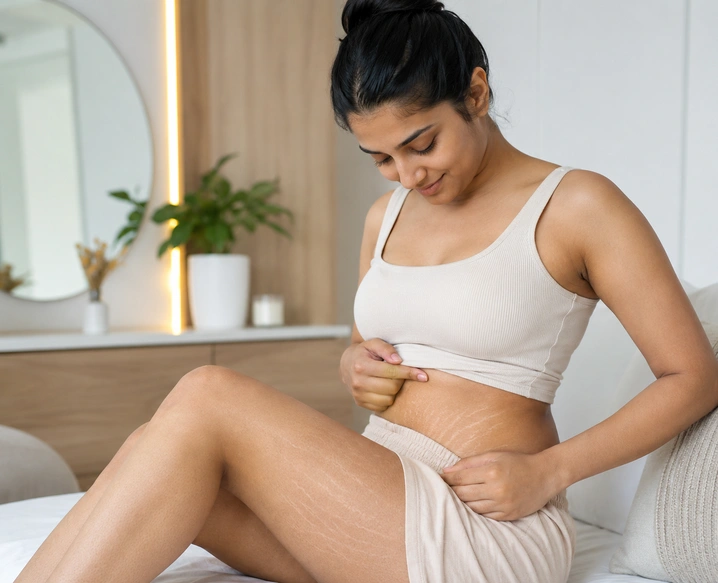
patients are advised to stay well hydrated, avoid scratching the area, and keep up gentle massage and regular exercise beforehand to support circulation

the DMC-Pixigenus® laser creates selective micro-perforations across the treatment area, leaving surrounding tissue intact
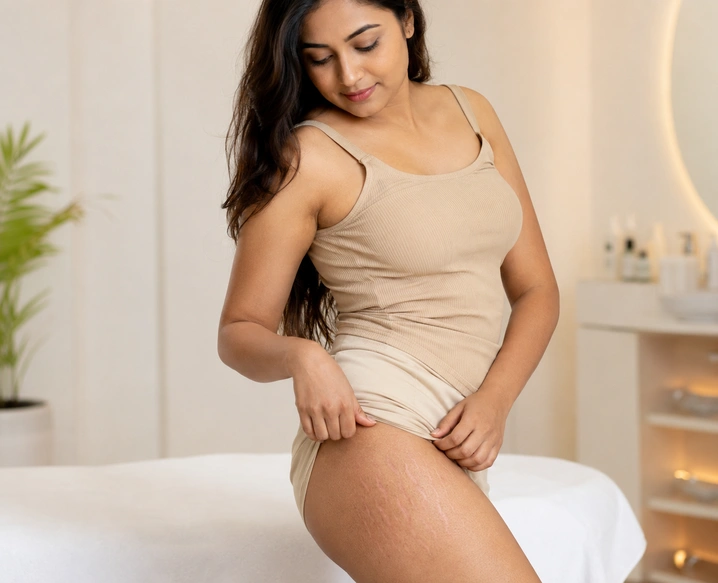
proteins extracted from the patient's own blood, rich in growth factors, are applied directly to the treated skin
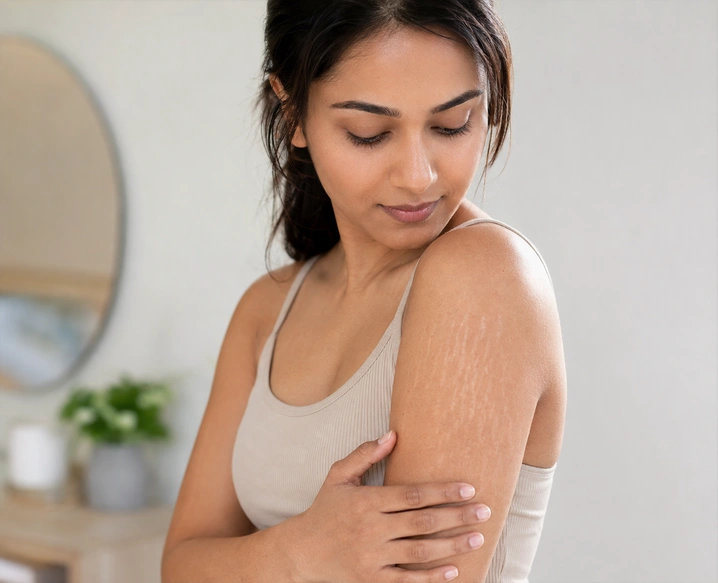
the skin may appear red or sunburnt right after; a moisturiser is typically applied
mild dryness, tightness, or light scabbing over the following days, with sun protection and gentle skincare essential during this window
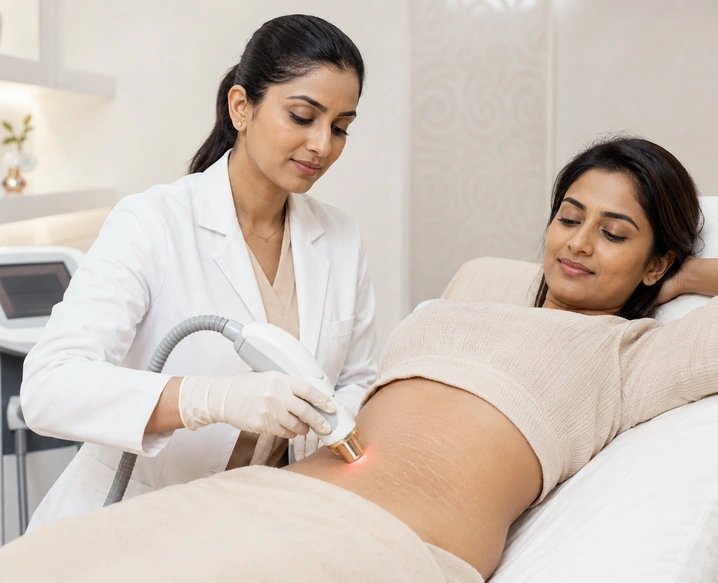
The selectivity of the perforation pattern is what sets this apart from older, fully ablative resurfacing by leaving untouched tissue between each perforation point, the epidermis regenerates faster, which is part of why recovery time stays minimal. The laser-induced micro-injuries trigger the body's own wound-healing cascade, prompting fresh collagen production in an area where collagen and elastin have already been disrupted by the original stretching.
The growth-factor layer applied afterward drawn from the patient's own blood is what pushes this beyond what the laser alone would achieve, accelerating the skin's repair response in the treated zone. Because stretch mark age matters for outcomes (shallower, more recent marks generally respond better than older, more established ones), the pre-treatment guidance around hydration, gentle massage, and circulation is aimed at giving the skin the best possible foundation before the laser and growth-factor combination goes to work.
It's a non-ablative laser treatment that creates selective micro-perforations in the skin to trigger collagen production, followed by an application of the patient's own blood-derived growth factors to accelerate healing and improve stretch mark appearance.
Shallower, more recently developed stretch marks tend to respond better than older, more established ones.
It's applied across common stretch-mark areas including the stomach, thighs, hips/buttocks, chest, lower back, upper back, flanks, and arms.
It causes very little pain and offers rapid healing; most patients see minimal disruption to daily activities, provided the post-care routine is followed.
It's not suitable for anyone with active viral skin inflammation or a platelet disorder.
Avoid rubbing the skin, skip hot tubs, steam rooms, and saunas for 1-2 weeks, avoid strong deodorants on the area for a few days, moisturise once redness subsides, and don't pick or scratch any post-treatment shedding or scabbing.
Cost is confirmed during consultation, based on the area treated and the extent of the stretch marks.
Schedule your visit for this specialized treatment.