
Stretch marks show up in a fairly predictable progression red or purple when they're new, fading to white or silvery as they mature. That color shift matters clinically: newer stretch marks tend to respond far better to treatment than older ones, because as marks age, the blood vessels in the area narrow and it becomes harder to stimulate fresh collagen production in response to any intervention. At their core, stretch marks are a form of scarring caused by the skin stretching too fast for its elastic limit commonly from pregnancy, puberty growth spurts, rapid weight change, or fast muscle gain which ruptures the collagen and elastin fibers in the dermis and leaves behind an area of disrupted healing. DMC-Neoclone® addresses this with a two-part approach: a titanium-tipped micro-injury device paired with the patient's own growth-factor-rich plasma, aimed at encouraging fresh collagen production in the area. The procedure is painless and takes about 45 minutes. Available at Dadu Medical Centre Vasant Vihar (South Delhi) & Rajouri Garden (West Delhi), under Dr. Nivedita Dadu.


We can help with that! Schedule a free online consultation with one of our expert Doctors and we'll help you create a customized plan.
Book a free online consultationmedical history, current medications, and expectations are discussed with the dermatologist
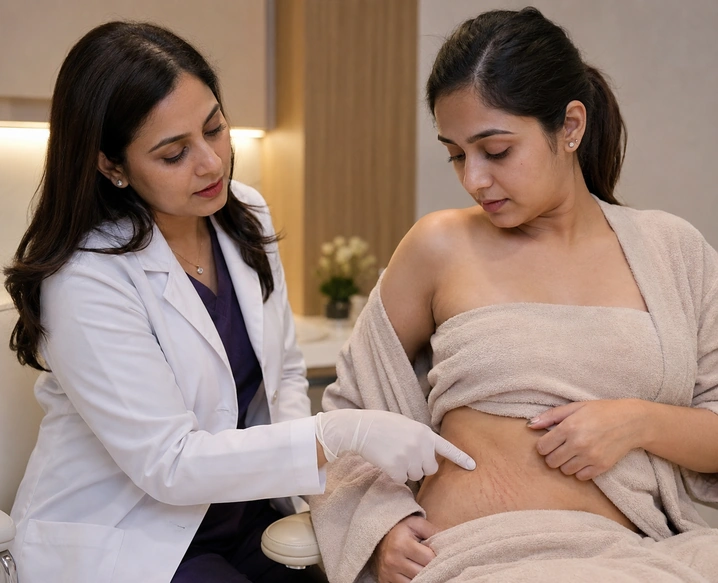
the stretch mark area is numbed with topical anaesthetic about 30-40 minutes before treatment begins
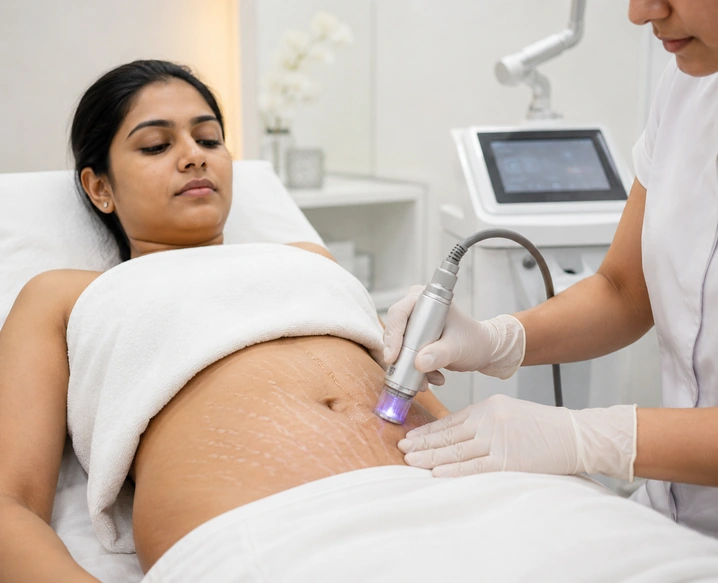
an array of pyramidal titanium tips (about 20 microns each) is applied to the treatment area, creating controlled micro-wounds

a small blood sample is drawn and centrifuged for about 10 minutes to separate out platelet-enriched plasma (roughly 5x the platelet concentration of regular blood)
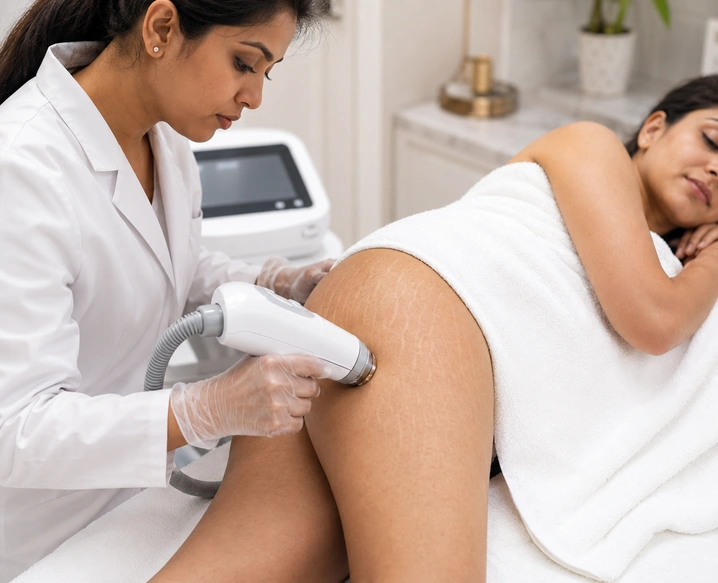
5-7 ml of that plasma is injected directly into the micro-injured area
results typically last 4-6 months, with monthly follow-up sessions recommended to maintain and build on progress

For stretch marks specifically, DMC-Neoclone® is run in ablative mode medium skin penetration with a higher contact time which works through controlled evaporation of water from the skin to create the micro-injuries. This exfoliates the top skin layers and triggers collagen remodeling underneath, which is the mechanism that actually fades the appearance of a stretch mark over time rather than just treating it superficially.
Layering the platelet-enriched plasma on top of that is what pushes the results further the proteins in that concentrated plasma help repair the skin damage the device has intentionally created, encourage blood circulation to the area, and support overall skin rejuvenation. This combination is part of why newer stretch marks (where blood supply to the area is still robust) tend to see better results than older, more established ones, where reduced local blood flow limits how much the treatment can stimulate fresh collagen.
It combines controlled micro-injury from a titanium-tipped device with an injection of the patient's own platelet-enriched plasma, together encouraging fresh collagen production and remodeling in the affected skin.
Newer, red or purple stretch marks generally respond better, since blood vessels in the area are still active. Older, white or silvery marks have narrower blood vessels, making it harder to stimulate the same collagen response.
No the area is numbed with topical anaesthetic beforehand, and the procedure itself is described as painless.
Results typically last 4-6 months, with follow-up sessions recommended monthly to maintain and build on progress.
Avoid scratching or rubbing the treated area, stay out of direct sun until the skin fully heals, skip makeup and harsh skin products until healed, and avoid saunas, hot showers, tanning beds, and intense workouts for a few days.
It's not recommended for pregnant or nursing women, or anyone with an active skin infection or condition that could affect results.
Cost depends on the size of the area and the extent of the stretch marks confirmed during consultation with Dr. Nivedita Dadu at Dadu Medical Centre.