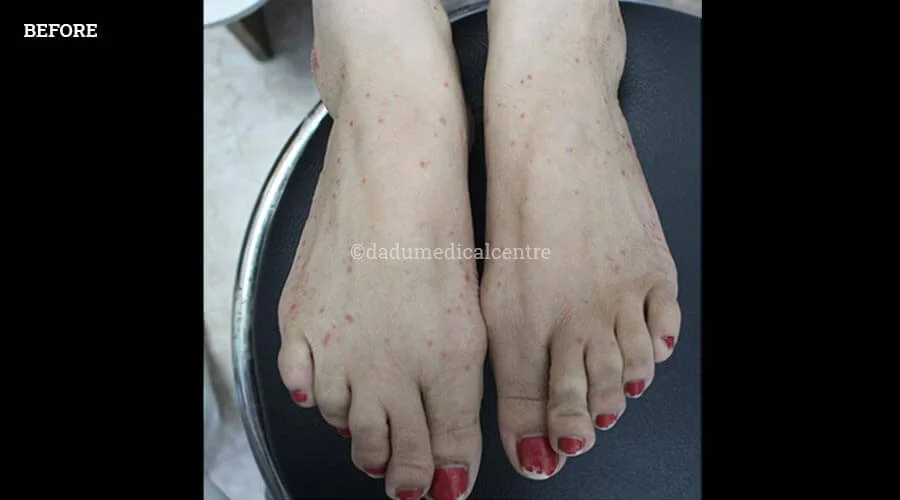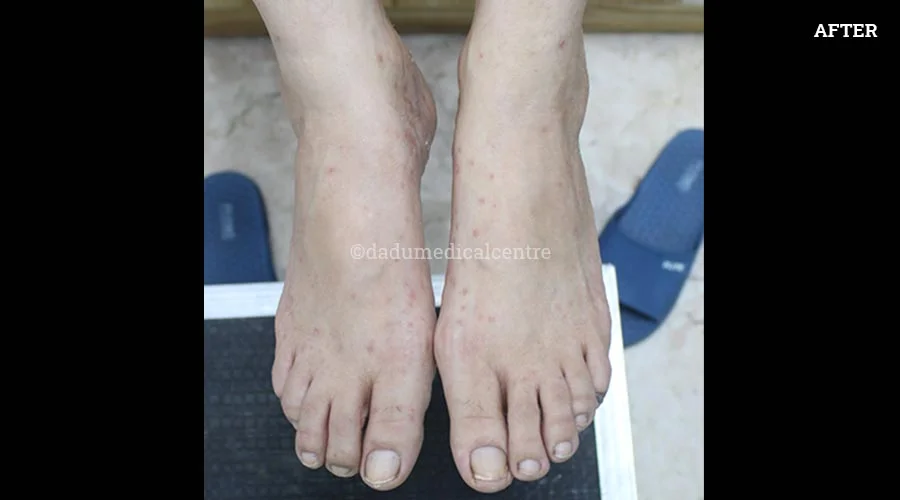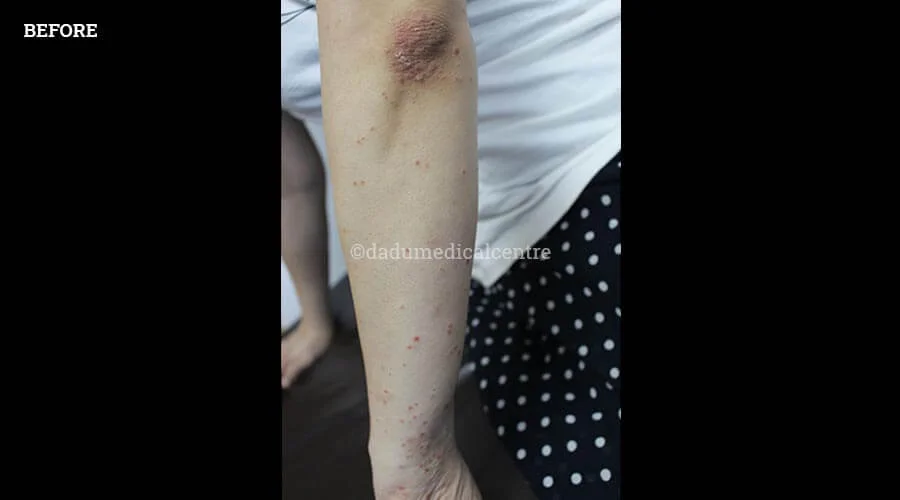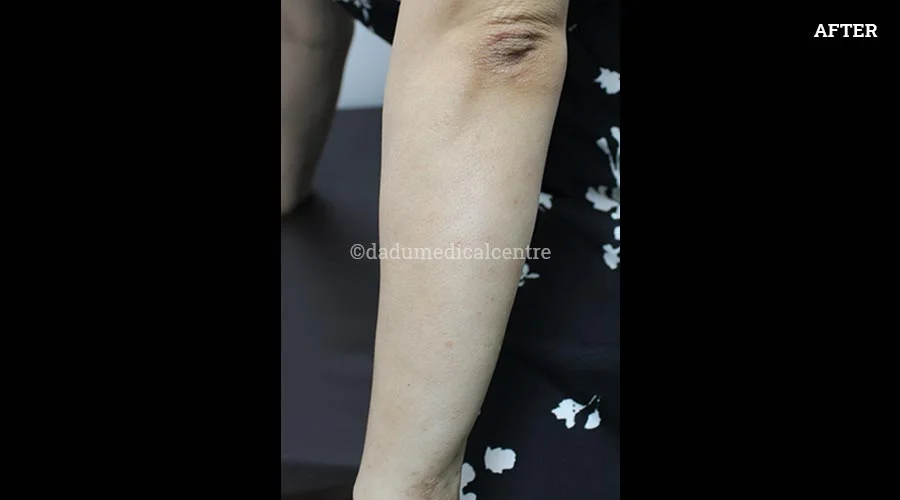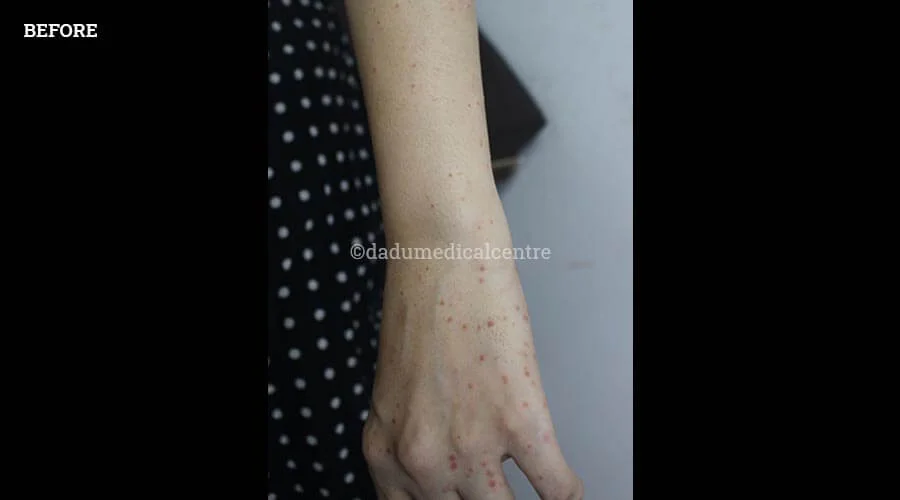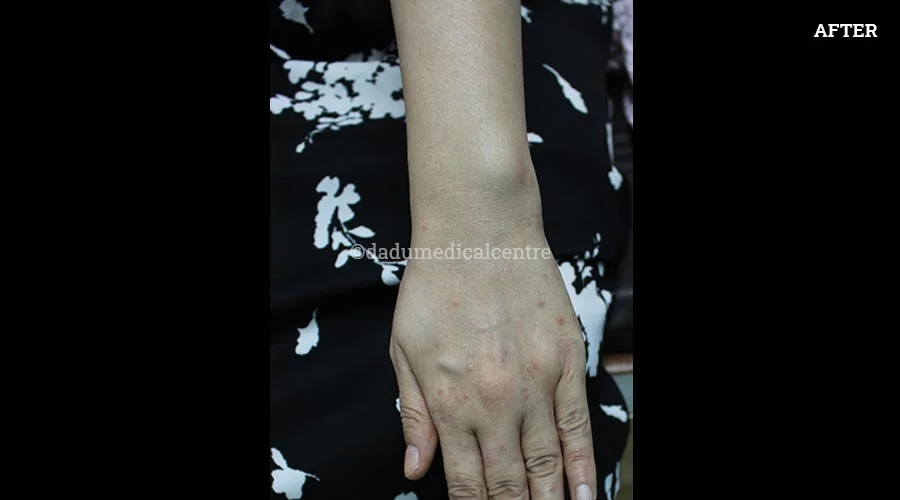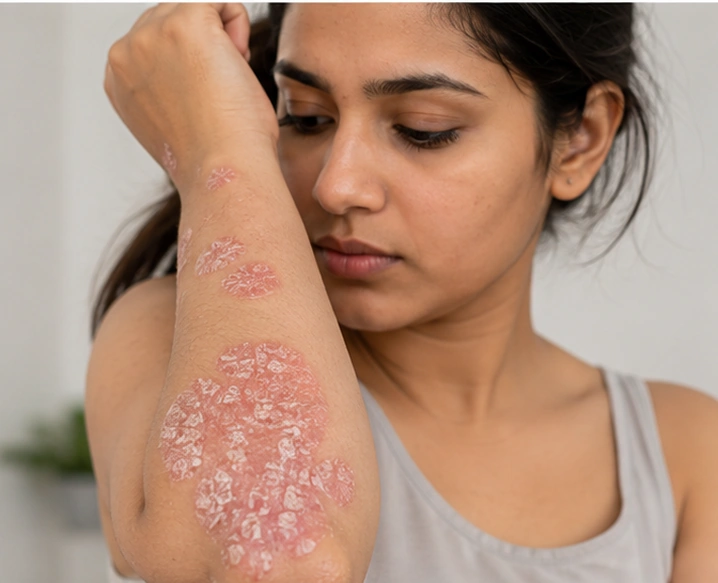
White flakes on your dark kurta that you keep brushing off. Thick, red patches on your elbows and knees that crack in winter. Maybe someone on the metro moved away when they saw your arm, as if it might be catching. It isn't. Psoriasis is a long-term skin condition, not an infection, and while it tends to come and go, it can be brought under good control. At Dadu Medical Centre, a skin clinic in Delhi, psoriasis treatment is built around your type of psoriasis, how much skin it covers and what sets off your flares. Dr. Nivedita Dadu and her team work with you over time, adjusting the plan as your skin changes.
Psoriasis is a chronic, immune-related skin condition. Normally, skin cells take a few weeks to grow, rise to the surface and shed. In psoriasis, the immune system speeds that process up so much that new cells pile up before the old ones fall away. The result is thick, red or darker patches covered with silvery-white scales, which can itch, burn or crack.
Psoriasis isn't contagious. It can start at any age, though it often begins before 35, and it tends to flare and settle over the years. In some people it also affects the joints, causing pain and stiffness, a condition called psoriatic arthritis, so joint symptoms are worth mentioning to your doctor.
Psoriasis starts with the immune system and genes. Then everyday triggers decide when it flares and how badly.
Psoriasis can't be prevented, but you can cut down how often it flares and how bad it gets.
Moisturize every day. Thick, fragrance-free creams soften scales and reduce cracking, especially after bathing.
Keep baths short and lukewarm. Hot water dries the skin and can worsen itching.
Don't pick or scratch the scales. It can cause bleeding and new patches.
Manage stress where you can. Regular sleep, exercise or anything that helps you unwind genuinely makes a difference.
Cut back on smoking and alcohol. Both make flares more likely.
Get infections treated early. A sore throat that lingers is worth a doctor's visit if you have psoriasis.
Don't stop your medicines suddenly. Stopping strong treatment without advice can cause a bad rebound flare.
Avoid steroid creams from the chemist. Used without a plan, they can thin the skin and make psoriasis harder to control later.
Book a free consultation at our clinic in Delhi and get a psoriasis plan that fits your skin and your routine.
Get in touch
Psoriasis isn't something you treat once and move on from. It needs a doctor who'll stay with you through the good months and the bad ones, and adjust things as your skin, the seasons and your life change. At Dadu Medical Centre, our doctors start by working out which type of psoriasis you have and what seems to trigger your flares. They'll also ask about joint pain, since that can change the treatment plan. Dr. Nivedita Dadu and her team then choose the gentlest approach that works for you, stepping it up only when needed. You'll get honest answers about what to expect, including the fact that there's no permanent cure yet, along with practical help to keep your skin calm for as long as possible.
No. It's an immune condition, not an infection, so you can't catch it from anyone or pass it on.
A mix of genes and an overactive immune system. Stress, infections, skin injury, cold weather, smoking and some medicines can then trigger flares.
Most people start with creams and scalp treatments. If it's more widespread, tablets or phototherapy may be added, and the plan is adjusted over time.
Not permanently yet. But with the right treatment, many people have long stretches where their skin is clear or nearly clear.
Itching and scaling often ease within a few weeks. Thicker plaques and nail psoriasis usually take longer to respond.
Scalp psoriasis tends to form thick, silvery scales with clear edges that can extend past the hairline. Dandruff is usually finer and looser. A dermatologist can tell the difference.
No single food causes it, but losing extra weight, eating a balanced diet and cutting back on alcohol can help reduce flares.
Some people with psoriasis develop psoriatic arthritis, with pain, stiffness or swelling in the joints. Mention it to your doctor early, as it changes the treatment.
Yes, though it's less common. Treatment is gentler and adjusted to their age.
Ask your doctor first. Stopping some medicines suddenly can cause a stronger flare, so they're usually reduced gradually.
Book a free consultation at our clinic in Delhi and get a psoriasis plan that fits your skin and your routine.
Dr. Nivedita Dadu explains what triggers psoriasis flares, how scalp psoriasis differs from dandruff, and the treatments that help keep it under control.
A-2/6, Vasant Vihar, New Delhi - 110057
+91 98109 77786 / +91 96677 21501
J-12/28, 1st Floor, Near Rajouri Garden Metro Station, New Delhi - 110027
+91 98109 77786 / +91 96677 21501
Recognised for excellence in dermatology and skin care.
Safe clinical protocols and technology-led treatment planning.
Personalised care delivered by experienced dermatology professionals.