



Vasant Vihar Clinic (South Delhi)
A-2/6, Vasant Vihar, New Delhi - 110057
+91 98109 77786 / +91 96677 21501
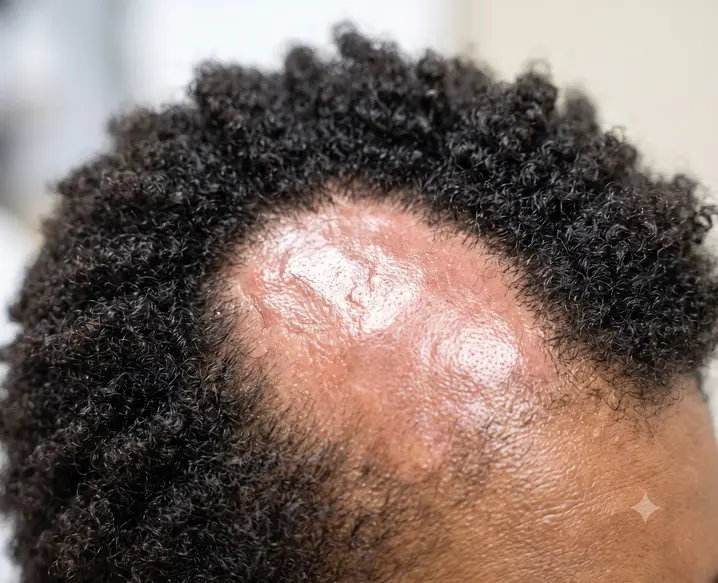
It started as one small bald spot. The skin there looked oddly shiny and smooth, and it itched or burned now and then. You thought it would grow back. Instead, a few months later, the patch was bigger and a new one had appeared close by. This could be scarring alopecia, a less common kind of hair loss where the follicles get damaged for good. That sounds frightening, but here's what matters most: hair that hasn't been affected yet can often be protected if treatment starts early. At Dadu Medical Centre, a skin and hair clinic in Delhi with centres in Vasant Vihar and Rajouri Garden, scarring alopecia treatment focuses on stopping the damage before it spreads. Dr. Nivedita Dadu and her team guide you through every step.
Scarring alopecia, also called cicatricial alopecia, is a group of conditions in which inflammation destroys hair follicles and replaces them with scar tissue. Once a follicle is scarred, it can't grow hair again. That's what makes it different from most other kinds of hair loss.
There are several types, including lichen planopilaris, frontal fibrosing alopecia, discoid lupus and folliculitis decalvans. Each one behaves a little differently, but they share one thing in common: the earlier the inflammation is controlled, the more hair can be saved. Early on, scarring alopecia can look a lot like ordinary patchy hair loss, which is why a proper diagnosis is so important.
In most cases, the exact trigger isn't clear. What doctors do know is that inflammation around the hair follicle is behind the damage, and it can come from a few places.
Scarring alopecia isn't contagious, and it isn't caused by washing or oiling your hair the wrong way.
Not every type can be prevented. These steps help you catch it early, when there's the most hair to protect.
Don't ignore itching or burning patches. Tenderness, redness or scaling around the hair can be early warning signs.
Get new bald patches checked quickly. The sooner inflammation is controlled, the less permanent damage there is.
Ease up on tight hairstyles. Rotate styles, loosen braids and avoid heavy extensions.
Treat scalp infections early. Pus spots or crusting shouldn't be left alone.
Protect your scalp from sun and heat damage. Especially if you already have thinning areas.
Stick to your treatment plan. Stopping medicines early can let the inflammation flare again.
Keep your follow-ups. Regular checks help catch any new activity before it spreads.
a transplant for scarred patches once the condition has been inactive for a long time.
cosmetic pigment that helps hide scarred, bald areas.
restores thin or scarred eyebrows.
adds definition to thinning or lost eyebrows.
Book a free consultation at our clinic in Delhi and get those patches checked before they spread.
Get in touch
Scarring alopecia is easy to miss early on, because it can look just like ordinary patchy hair loss. By the time many people get the right diagnosis, some hair has already been lost for good. At Dadu Medical Centre, our doctors examine the scalp closely and, when needed, confirm the type with a biopsy before starting treatment. Dr. Nivedita Dadu and her team then focus on controlling the inflammation quickly, because every month counts with this condition. You'll get honest answers about what can and can't grow back, along with regular follow-ups to make sure the condition stays quiet. You can be seen at either our Vasant Vihar or Rajouri Garden centre.
Ans. Not in areas where the follicles are already scarred. Treatment focuses on saving the hair around them and stopping new patches.
Ans. Inflammation that damages the hair follicles, often from the immune system, and sometimes from infection, long-term pulling or injury.
Ans. It starts with a detailed scalp exam and sometimes a biopsy. Treatment then uses creams, injections or tablets to calm the inflammation, plus care for the remaining hair.
Ans. In alopecia areata, follicles stay alive, so hair usually grows back. In scarring alopecia, follicles are destroyed, so hair doesn't return in those spots.
Ans. Because lost follicles can't be brought back. The sooner the inflammation is controlled, the more hair is protected.
Ans. No. It can't spread from one person to another.
Ans. Sometimes, but only after the condition has been completely inactive for a long time. Doing it too early risks losing the transplanted hair.
Ans. It can. Itching, burning or tenderness around the hairs is common in some types, especially when the condition is active.
Ans. Some types, like frontal fibrosing alopecia, are seen more often in women, especially after menopause.
Ans. You can book at either our Vasant Vihar or Rajouri Garden centre in Delhi.
Book a free consultation at our clinic in Delhi and get those patches checked before they spread.
A-2/6, Vasant Vihar, New Delhi - 110057
+91 98109 77786 / +91 96677 21501

J-12/28, 1st Floor, Near Rajouri Garden Metro Station, New Delhi - 110027
+91 98109 77786 / +91 96677 21501
Recognised for excellence in dermatology and skin care.
Safe clinical protocols and technology-led treatment planning.
Personalised care delivered by experienced dermatology professionals.