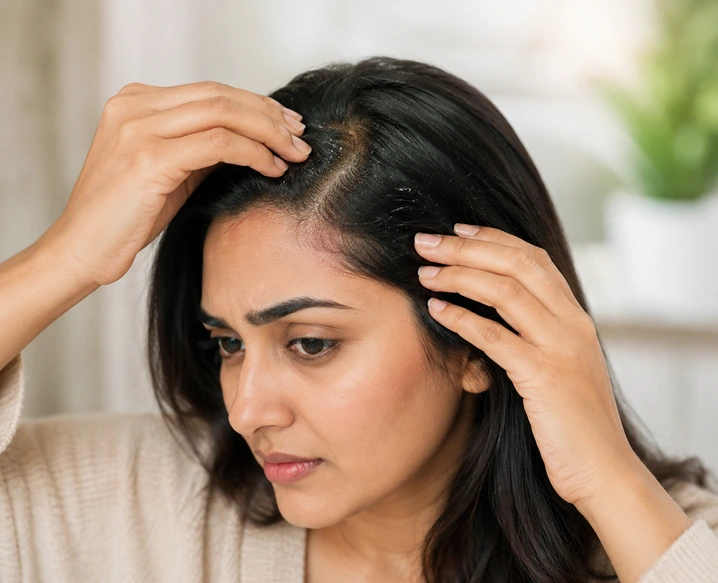
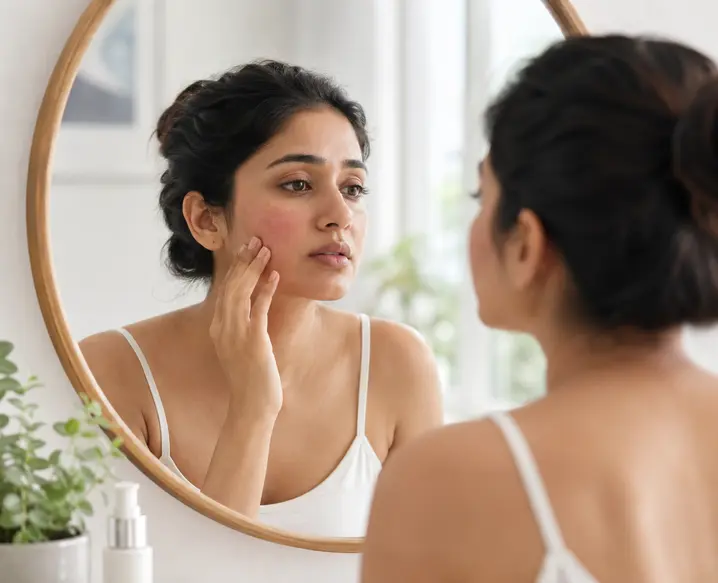
White flakes all over your black kurta. Red, greasy patches around the nose that come back every winter. Itchy eyebrows you keep rubbing without even noticing. You've tried three anti-dandruff shampoos, and each one worked for a couple of weeks before the flakes crept back. That's usually more than ordinary dandruff. It's seborrheic dermatitis, and while it tends to stick around, it can be kept quiet with the right care. At Dadu Medical Centre, a skin clinic in Delhi, seborrheic dermatitis treatment covers the scalp, face and body. Dr. Nivedita Dadu and her team treat the flare you have now and set you up with a routine that holds.
The skin goes red and flaky, sometimes greasy, sometimes itchy. A yeast called Malassezia, which normally lives on everyone's skin, feeds on the extra oil, and in some people the skin overreacts to it. In babies, the same condition shows up as yellowish, crusty patches on the scalp, known as cradle cap.
It isn't contagious and it isn't harmful. It does, however, come back in flares, especially when the weather changes, which is why a maintenance routine matters as much as the first round of treatment.
There isn't one single cause. It's usually a combination of oily skin, yeast and a few everyday triggers.
You can't make it disappear for good, but these habits keep flare-ups less frequent and milder.
Wash your hair regularly. For most people, every other day works well, with a medicated shampoo if your doctor suggests one.
Leave the shampoo on for a few minutes. Rinsing it straight off means it doesn't get time to work.
Go easy on hair oil. Heavy oiling can feed the yeast and make the flakes worse, not better.
Don't scratch or pick at flakes. It irritates the skin and can lead to infection.
Wash your face gently. Don't forget the eyebrows, the sides of the nose and behind the ears.
Manage stress where you can. Sleep does more for your skin than most people expect.
Keep skin folds dry. In summer especially, change out of sweaty clothes soon.
See a dermatologist if shampoos stop working. Stubborn or spreading patches usually need prescription treatment.
deep-cleans the scalp to clear built-up flakes and ease the itch.
helps control flaking and chronic scalp scaling.
Book a free consultation and get a routine that keeps the flakes and redness from coming back every season.
Get in touch
Most people with seborrheic dermatitis have already tried every anti-dandruff shampoo on the shelf. Some work for a while. Then the flakes come back. At Dadu Medical Centre, our doctors first make sure it really is seborrheic dermatitis, because psoriasis and a few other conditions can look very similar on the scalp and need different treatment. Dr. Nivedita Dadu and her team then treat the flare you have now and give you a simple maintenance routine for the months after, so you're not starting from scratch every winter. If the patches are on your face, the treatment is kept gentle enough to use day to day without irritating the skin.
Dandruff is really its mildest form, limited to the scalp. When it spreads to the face or body, or turns red and inflamed, it's called seborrheic dermatitis.
A mix of oily skin and a yeast that normally lives on the skin. Weather changes, stress and hormones then decide when it flares.
Usually with a medicated shampoo and a cream for the face or body. Scalp treatments or tablets are added if it's more stubborn.
No. You can share a pillow or a comb and nobody will catch it from you.
Honestly, no. It tends to come and go. But once you're on the right routine, most people only notice it now and then.
Often within two to four weeks of using the right products properly. Redness on the face can settle even faster.
Probably, especially when the season changes. Using the medicated shampoo once or twice a week, even when things look fine, helps keep it away.
It's better not to overdo it. Oil can feed the yeast, so heavy oiling sometimes makes the flaking worse.
It usually clears by itself within a few months. Gentle washing and a soft brush help. If it spreads or looks sore, show it to a dermatologist rather than picking at it.
Yes. Choose light, non-oily products and wash them off properly at night, and skip heavy creams on the patches.
Book a free consultation and get a routine that keeps the flakes and redness from coming back every season.
Dr. Nivedita Dadu explains how seborrheic dermatitis differs from regular dandruff, why hair oiling may not help, and how to keep flare-ups in check.

A-2/6, Vasant Vihar, New Delhi - 110057
+91 98109 77786 / +91 96677 21501
J-12/28, 1st Floor, Near Rajouri Garden Metro Station, New Delhi - 110027
+91 98109 77786 / +91 96677 21501
Recognised for excellence in dermatology and skin care.
Safe clinical protocols and technology-led treatment planning.
Personalised care delivered by experienced dermatology professionals.