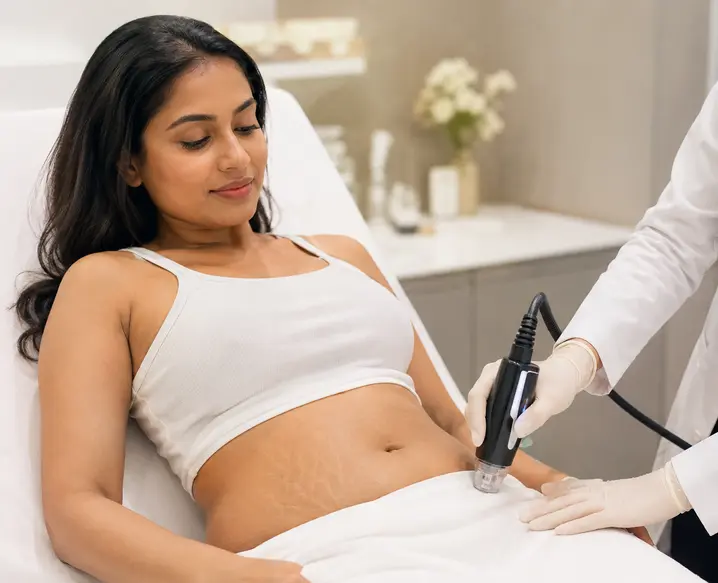
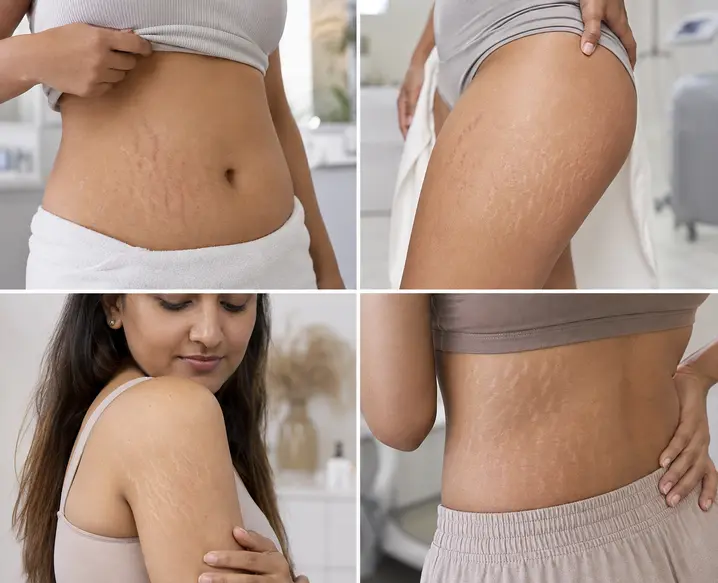
Stretch marks show up when skin gets stretched faster than it can keep pace with losing elasticity quickly in the process. They form in the dermis, the deeper skin layer responsible for holding the skin's shape, and most commonly appear on the abdomen, breasts, arms, back, and thighs. Color is actually a useful clue to age: newer marks tend to look red or purple (a sign of exposed blood vessels in the injured dermis), while older ones fade to white or silver as blood vessels contract and underlying fat becomes more visible. MNRF (Microneedling Radiofrequency) treats this by combining fine, insulated microneedles with RF energy delivered to a controlled depth the needling creates micro-injuries that trigger natural healing, while the RF pulse breaks down disorganized collagen fibres and stimulates fibroblasts to build new, better-structured collagen and elastin. A session runs about 45 minutes. Available at Dadu Medical Centre Vasant Vihar (South Delhi) & Rajouri Garden (West Delhi), under Dr. Nivedita Dadu.

We can help with that! Schedule a free online consultation with one of our expert Doctors and we'll help you create a customized plan.
Book a free online consultationthe treatment area is cleaned
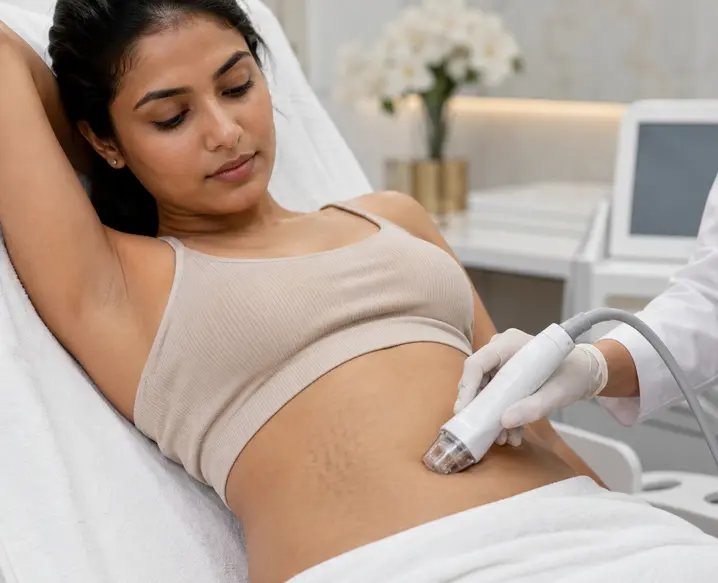
topical anaesthesia is applied and left on for 45 minutes to an hour before treatment
energy level, radiation time, and needle depth are manually set based on the area and severity being treated
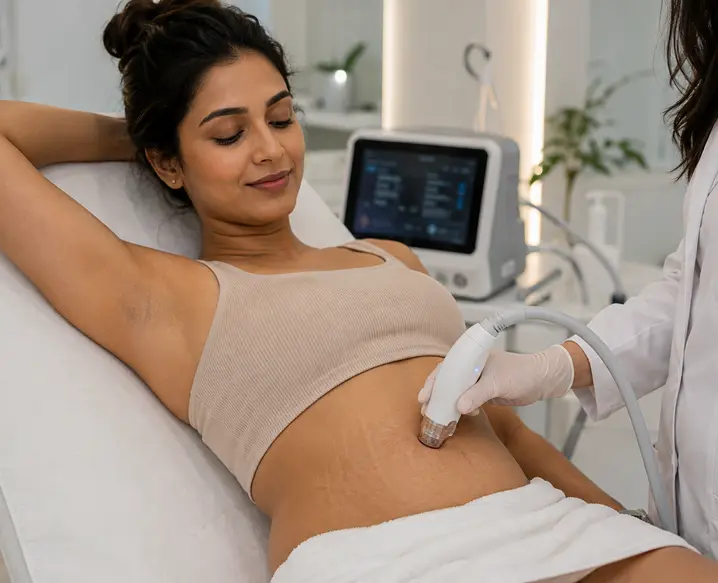
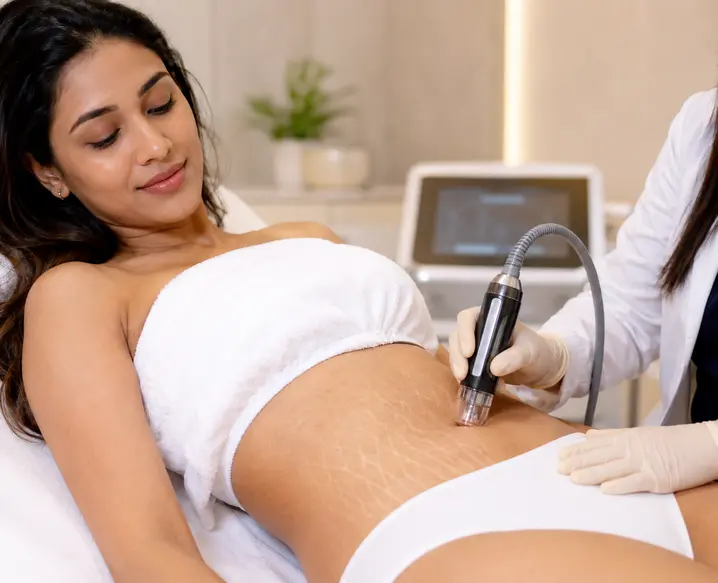
insulated microneedles penetrate the epidermis and dermis via a foot or finger switch, delivering RF energy deep into the skin for dermal coagulation

deeper passes first, followed by shallower ones with reduced power as the needle gets closer to the surface
the area is cleansed, any minor bleeding is managed with light pressure, and a cooling pack, mask, or cold air may be used for comfort
antibiotic and sunscreen creams are typically provided
repeated every 4-6 weeks, for a total of 3-5 sessions depending on progress
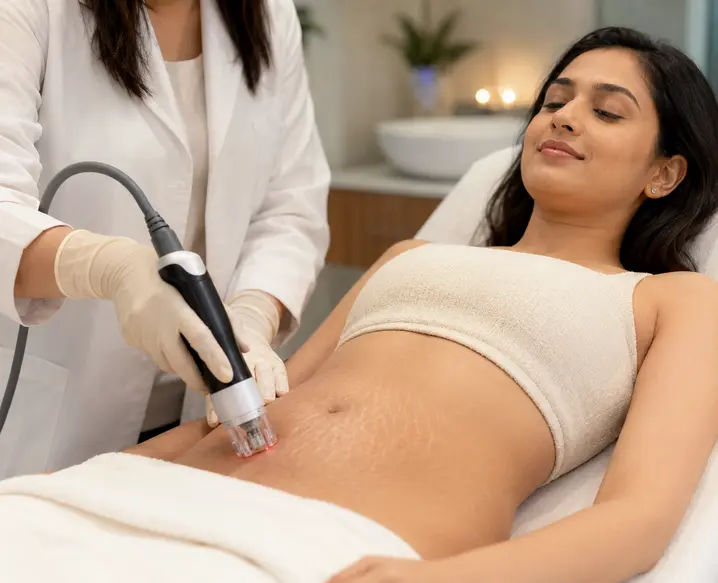
The insulation on the microneedles is what allows MNRF to work at depth without damaging the epidermis along the way RF energy stays concentrated at the needle tip and target depth rather than spreading across the surface. That matters for stretch marks specifically, since the damaged collagen and elastin fibres sit down in the dermis, not at the surface.
The treatment works on two fronts simultaneously: the microneedling itself triggers a wound-healing response that brings natural growth factors into play, while the RF pulse actively degrades the older, disorganized collagen holding the stretch mark's texture, prompting fibroblasts to rebuild it more evenly. Energy and depth settings are adjusted per patient and per area, which is part of why this works across such a broad range of skin types and tones the protocol isn't fixed, it's calibrated.
It's generally well-tolerated. Numbing cream is applied beforehand to minimise discomfort, and mild redness or swelling afterward typically resolves within a few days.
Most dermatologists recommend 3-5 sessions spaced 4-6 weeks apart, though the exact number depends on stretch mark severity, skin type, and how the skin responds to treatment.
Temporary redness and swelling at the treatment site are the main effects, usually resolving on their own within a few days. Following aftercare instructions helps prevent any additional skin irritation.
It works across most skin types and tones, and suits anyone looking to reduce stretch marks, rejuvenate skin, or improve overall texture a consultation confirms whether it's the right fit for a specific case.
Avoid rubbing the treated area vigorously, skip hot water baths for 1-2 weeks, avoid strong deodorants on the area for a few days, moisturise once redness subsides (skin can feel dry afterward), and don't scratch or pick at any post-treatment shedding or scabbing.
Cost is confirmed during consultation with the skin experts at Dadu Medical Centre, based on treatment area and number of sessions needed.